

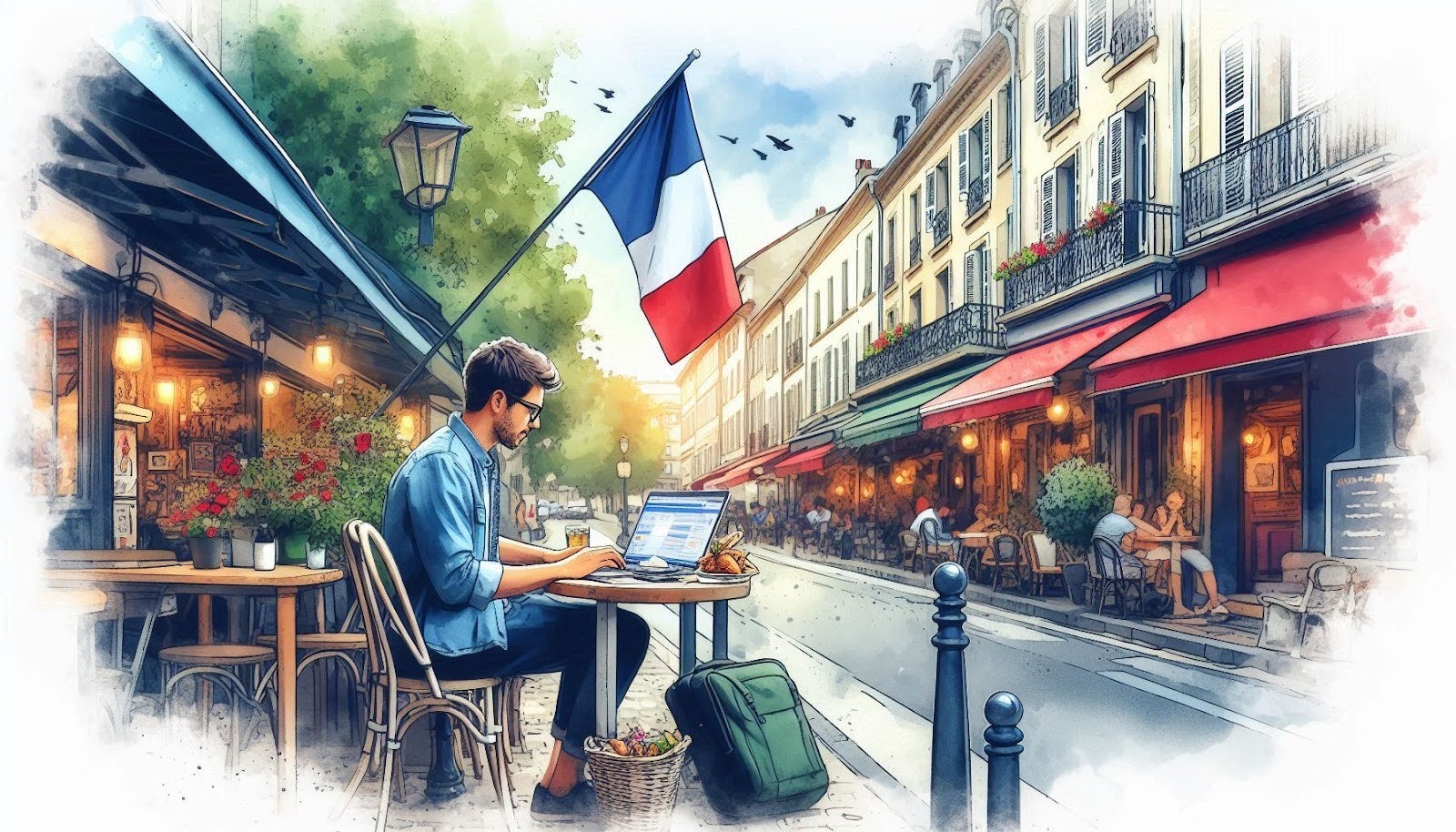
The leading locations now combine visa access, quality of life, affordability, and reliable connectivity, rather than just beaches and low prices.
WASHINGTON, DC.
The most popular digital nomad destinations in 2026 no longer look like the old fantasy version of remote work abroad. A few years ago, the dream was simple. Find a beach, find cheap rent, open a laptop, and call it freedom. That version still exists on social media, but it no longer explains how the real market works. The places rising to the top now are not just pretty or inexpensive. They are the countries and cities that function well enough for people to build actual working lives inside them.
That is why the new map of digital nomad living looks more serious and more European than many people expected. Europe has not won because it is the cheapest region. It clearly is not. Europe has won a larger share of the conversation because it increasingly offers what remote workers now value most after the novelty of permanent travel has worn off: legal clarity, strong infrastructure, decent healthcare, safer urban environments, reliable internet, better transport, and cities where a medium-term stay can still feel like real life rather than a travel stunt.
The bigger shift underneath all this is that remote work itself has matured. As AP reported in its 2025 look at the increasingly competitive remote job market, Europe and Australia now offer more remote jobs than the United States in some parts of the market, while dozens of countries continue offering digital nomad visas. That matters because the leading destinations are no longer simply benefiting from tourism momentum. They are positioning themselves inside a new labor geography, one where work can travel, and where the most attractive locations are the ones that make that mobility sustainable.
Europe is no longer just a lifestyle choice. It is becoming a remote-work operating system.
This is the clearest reason Europe now dominates so much of the serious nomad conversation. The strongest countries in Europe are not merely attractive. They are administratively legible. A remote worker can land in Spain, Portugal, Greece, or Croatia and increasingly see not just a beautiful place to spend time, but a country with rules, permits, systems, and services that treat long-stay foreign remote workers as a recognizable category rather than a tolerated accident.
That shift matters more than people realize. The first generation of post-pandemic digital nomads often treated the whole lifestyle like a rolling workaround. Tourists stay here, visa run there, another short rental, another new SIM card, another round of uncertainty. In 2026, many workers no longer want that much chaos. They want somewhere they can do serious work, sleep properly, stay legal, pay for decent housing, and feel reasonably sure that next month will not be consumed by administrative improvisation.
Europe offers that better than most regions. It is not uniformly easy. It is not uniformly cheap. But it is increasingly good at something more important, reducing friction. And in the digital nomad economy, friction reduction is now one of the most valuable products any country can sell.
Spain still sits near the center of the new map.
If there is one country that captures this new European model best, it is Spain. The country is no longer just popular because of weather, food, and walkable cities, although those still matter enormously. Spain has stayed near the top because it has managed to combine lifestyle appeal with a formal remote-work pathway and enough internal variety that different kinds of nomads can find different versions of the life they want.
Barcelona still attracts workers who want density, international energy, and a large existing remote ecosystem. Madrid draws professionals who prefer a capital city rhythm, better domestic connectivity, and a more business-facing environment. Valencia has become especially attractive to people who want a lower-friction, more balanced version of Spanish urban life. Malaga continues to pull in workers who want southern weather and a growing tech-friendly culture. The Canary Islands remain a separate draw for people who want longer sunshine-heavy stays and a distinct island lifestyle without leaving Spanish systems behind.
Spain’s real strength is that it does not force workers to choose between legal seriousness and quality of life. The country’s official telework visa framework makes clear that foreigners can apply to live in Spain while carrying out remote work for companies located outside the country. That matters because in 2026, popularity is not just about Instagram appeal. It is about whether a destination can absorb remote workers in a way that feels formal enough for adults trying to build stable lives.
Spain also benefits from scale. A worker can begin in one city, change pace without changing countries, and still remain inside a familiar legal and transport system. That is a major advantage over countries that are attractive for one hub but less convincing beyond it. Spain lets remote workers evolve inside the same national framework. Someone who starts in Barcelona can later move to Valencia or Seville without rebuilding everything from scratch.
Of course, Spain also shows the limits of success. Housing pressure, overtourism fatigue, and neighborhood backlash are real. Some of the most desirable districts in its most famous cities now feel much more contested than they did a few years ago. But Spain remains a top destination because even its problems are often the problems of a place that still works extremely well for remote living.
Portugal remains one of the most emotionally persuasive destinations in the world.
Portugal’s place near the top of the 2026 map is no mystery. It remains one of the easiest countries for remote workers to imagine themselves living in for longer than a casual season. The country feels manageable. Lisbon still offers urban energy, Atlantic light, and a mature international scene. Porto offers a slightly more grounded rhythm with strong cultural identity and a calmer working feel. The Algarve still attracts people who want the climate and a slower pace. Smaller places, once too marginal for serious remote work, now feel much more viable because the broader nomad ecosystem is already there.
Portugal’s advantage is not that it is still cheap in the way it once was. In many high-demand areas, it clearly is not. Its advantage is that it feels livable. The country offers a kind of calm usability that many remote workers value even more than bargain pricing. The scale is manageable. Inter-city movement is relatively easy. Food, public life, and neighborhood culture remain strong. The climate still sells itself. And crucially, the state has made remote work legible through its own national visa portal, which explicitly includes a remote work and digital nomad route.
That combination of emotional ease and administrative seriousness is why Portugal keeps holding its place even as costs rise and local tensions over housing become more intense. For many workers, Portugal still feels like the country where remote life looks most naturally integrated into ordinary life. The cafés, the neighborhoods, the coasts, and the pace all help create a sense that one can work hard there without feeling locked inside a productivity machine.
The downside is obvious. Portugal’s success has made it harder for locals in some cities, and harder for incoming workers who assumed the country still reflected older cost myths. Lisbon, especially, is no longer the bargain destination many remote workers still imagine. But popularity in 2026 is not only about being cheap. It is about whether a destination still feels worth the cost relative to what it offers. Portugal does.
Greece is rising because it now feels like more than a summer fantasy.
Greece spent years being treated by many remote workers as more of a dream destination than a real operating base. In 2026, that perception is changing. Athens has become much more credible as a serious remote-work city, not because it suddenly became polished in the sterile sense, but because it now feels usable enough to support real routines. Better coworking culture, stronger medium-term rental awareness, and a growing sense that Greece wants mobile workers rather than merely tolerates them have all helped.
Part of that is formal. The Hellenic Republic’s own digital nomad visa information makes plain that Greece has chosen to compete for non-EU remote professionals through a specific pathway. That matters because Greece’s appeal is not only scenic. It now has a clearer place in the broader European race for long-stay foreign earners.
Athens is especially important here. For years, remote workers often viewed Greece through the islands first. Now more of them are understanding that Athens offers something strategically useful, a lower-cost southern European capital with history, food, public life, reasonable connectivity, and enough urban texture that life outside work still feels full. The islands still matter, but more experienced remote workers are increasingly choosing Greece for a city-first base, not just a postcard.
The challenge for Greece is that its infrastructure is not always as frictionless as Spain’s or Portugal’s in every respect. But that can be precisely why it appeals to certain workers. It still feels alive, textured, and less over-managed than some of Europe’s more polished nomad capitals. For people who want Europe without losing a sense of emotional intensity, Greece is becoming one of the strongest answers on the map.
Croatia remains one of Europe’s clearest purpose-built nomad plays.
Croatia deserves more respect in the 2026 conversation than it often gets. It may not dominate the lifestyle mythology in the same way Spain or Portugal do, but it has made one of the most explicit structural plays for remote workers. The country’s official temporary stay rules for digital nomads define the category clearly and allow temporary stay for substantial periods, with an online application route and family reunification possibilities.
That kind of clarity matters. Croatia signals that it is not guessing at this market. It wants it. And because the country combines Adriatic appeal with smaller-city options and a lower-cost profile than some of Western Europe’s most crowded hubs, it remains unusually attractive to workers who want the European experience without paying premium-city prices from day one.
Zagreb appeals to people who want a more ordinary city rhythm. Split and Dubrovnik attract those drawn to the coast, even if seasonality and tourism pressure complicate those choices. Smaller Croatian locations are also becoming more plausible because remote workers now care less about headline cities alone and more about whether daily life is easy enough to sustain.
Croatia’s limitation is that it can still feel more transitional than the heaviest hitters. But for workers who want a slower European base with genuine legal clarity and a lighter price tag, it remains one of the smartest choices on the continent.
Estonia still matters because it understood the trend early and still takes it seriously.
Estonia no longer dominates the digital nomad conversation the way it did when it first became famous for formalizing the category early. But that early start still matters in 2026. The country’s digital nomad infrastructure feels mature precisely because it is no longer a novelty experiment. Estonia already knows what kind of person it is targeting, and its system reflects that.
The official Estonian guidance continues to make the process and thresholds explicit, including income requirements and the distinction between short- and long-stay options. In practical terms, Estonia remains appealing to a narrower but serious subset of workers, those who care deeply about digital administration, institutional clarity, safety, and an environment that feels built for digitally fluent professionals. The country’s current digital nomad visa guidance still reflects that serious, process-oriented approach.
Estonia is not the answer for everyone. Climate alone narrows the field. Its cost structure is not Southeast Asia-level cheap. But its continued relevance says something important about the 2026 market. Popularity is no longer driven purely by mood. It is driven by whether a country can deliver a coherent remote-work proposition to people who care more about system quality than scenery alone.
Italy is rising in prestige, even if it is still uneven in practice.
Italy is one of the more interesting countries on the 2026 map because it illustrates the difference between desire and operational reality. The country has always had natural appeal, culture, food, heritage, city depth, coastlines, mountains, and a brand that sells itself. For years, though, many remote workers loved the idea of Italy more than the actual remote-work logistics it offered.
That is changing. Italy’s consular information now clearly distinguishes between digital nomad and remote worker categories, signaling that the country has begun taking the market more formally. Even where practical execution may still feel uneven from city to city, the official architecture shows intent. In the 2026 landscape, that counts. Italy is increasingly competitive not because it suddenly became the cheapest or the easiest, but because it no longer relies on romance alone.
Milan is becoming more credible to workers who want a serious city with stronger infrastructure. Rome appeals to those willing to tolerate some friction in exchange for scale and intensity. Secondary cities and coastal bases may become more attractive over time if the formal frameworks continue to improve and if housing markets remain more usable than the most overexposed hubs elsewhere in Europe.
Italy’s rise also says something broader about the new work map. Once a country decides to build clearer lanes for mobile professionals, it can quickly move from a fantasy destination to a plausible base. The market no longer needs perfection. It needs enough structure to turn desire into a repeatable lifestyle.
The rest of the world still matters, but Europe increasingly defines the standard.
This does not mean Europe has replaced the rest of the map. Thailand still dominates a large part of the value conversation. Mexico remains one of the most practical destinations for North Americans. Indonesia, especially Bali, still exerts an enormous emotional pull. The Gulf keeps attracting a premium, infrastructure-first segment of mobile professionals.
But Europe now defines the standard more than the exception. It is the region most strongly shaping what a “serious” digital nomad destination looks like in 2026. A real visa or permit. Good enough healthcare. Reliable connectivity. Better public transport. Moderate to high safety. Walkable neighborhoods. The ability to work hard without feeling trapped inside a resort bubble or permanent visa improvisation.
That is why the most popular destinations now reflect a new global map of work rather than a simple travel trend. The winning countries are no longer just inviting outsiders to visit. They are competing to host a mobile layer of professional life.
For some workers, destination choice is becoming part of a larger mobility strategy.
The market is also maturing in another way. The more experienced remote workers become, the less they think about the next city. They begin thinking about legal optionality, long-term residency pathways, banking access, and broader cross-border flexibility. That is where destination choice can start overlapping with wider mobility planning and second citizenship thinking.
For a subset of international workers, that wider conversation increasingly touches advisory services such as Amicus International Consulting’s second-passport and global mobility work. That is not because every digital nomad needs a second passport. Most do not. But it does show how the map of work is merging with a map of legal mobility. Remote work is not just about where people want to spend three months anymore. For some, it is becoming part of a deeper question about where they may want the right to remain, move, or regroup in the future.
That is another reason Europe matters so much. It sits at the center of a broader discussion about not only lifestyle, but access, resilience, and longer-term optionality.
The real winners in 2026 are the countries that make remote life feel adult.
That may be the clearest way to understand the new hierarchy. The most popular digital nomad destinations are no longer simply the most beautiful or the cheapest. They are the places that make remote life feel possible without making it feel childish. They let workers stay legal, work seriously, build routines, navigate systems, enjoy daily life, and imagine remaining longer than one impulsive season.
Europe now stands at the center of that evolution because it has moved fastest in turning remote work from a travel fantasy into a structured living category. Spain leads with range and depth. Portugal leads with emotional usability. Greece rises through atmosphere and growing legal clarity. Croatia offers one of the clearest targeted plays. Estonia retains relevance through digital seriousness. Italy is climbing as desire and policy begin to converge.
The new map of work is not just global. It is selective. And in 2026, the places people keep choosing are the ones that understand a simple truth. Remote workers still want beauty and freedom. But what they increasingly pay for is stability, clarity, and a life that still functions after the honeymoon phase ends.