

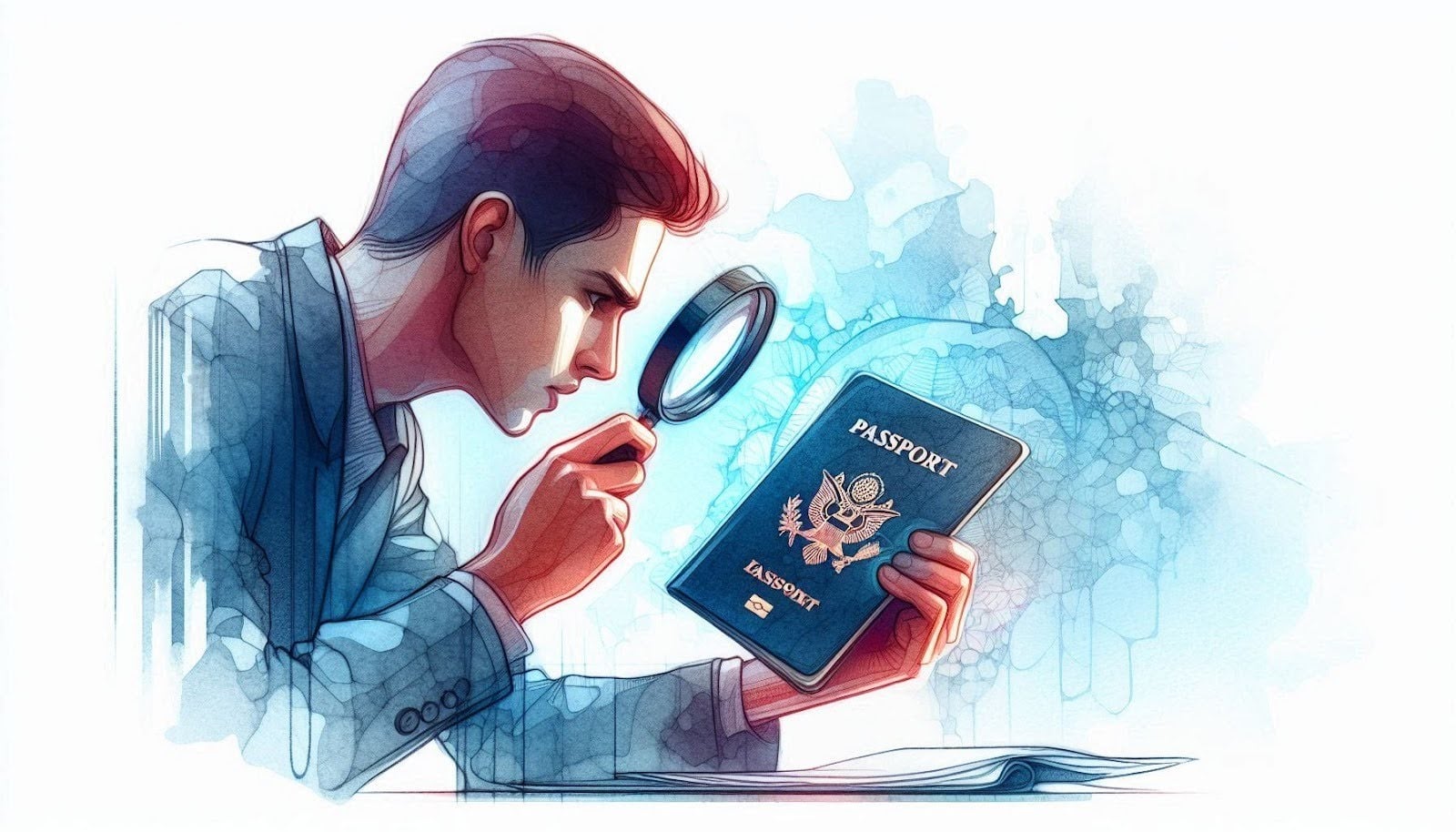
The 1990s shift to digitally printed images helped make passports tougher, cleaner, and far more secure.
WASHINGTON, DC
For years, one of the simplest passport fraud methods was also one of the most effective. Change the photo, keep the rest of the document looking real enough, and hope the person inspecting it would trust the booklet in front of them more than the face standing behind the counter.
That was the weakness of the old glued-photo passport.
When a travel document treated the portrait as a separate object, something attached to the page rather than built into it, the image became a natural target. A fraudster did not always need to counterfeit the entire passport. In some cases, the real document could be altered by lifting, replacing, or manipulating the photograph while leaving enough of the rest intact to fool a rushed inspection.
Modern passport design changed that equation.
The shift to digitally printed images in the 1990s and beyond helped transform the passport photo from a vulnerable add-on into an integrated security feature. Once the portrait was printed directly onto secure paper or later embedded into tougher data pages through laser personalization and polycarbonate construction, classic photo substitution became much harder to pull off cleanly. The attack did not disappear, but it stopped being easy in the way it once was.
That change matters because the passport photo has always been more than decoration; it is the visible link between the traveler and the document. If that link can be tampered with, the whole identity claim starts to wobble. If that link is deeply fused into the document, fraud becomes far more difficult.
The old glued-in picture was an obvious weak point.
Earlier passport designs often treated the photograph as a separate physical element. The image could be glued to the page, covered with laminate, or overlapped by stamps and seals intended to make tampering visible. Those methods were clever for their time, but they still carried a structural weakness. The photo began life as something distinct from the page itself.
That created opportunity.
If someone could remove the original image with enough care, substitute a new one, and preserve the surrounding paper well enough, a genuine passport could be turned into a fraudulent identity tool. Even when stamps crossed from page to photo or laminates were designed to show disturbance, the basic fraud logic remained the same. The picture was still a target because it was still something attached.
This is why older passport fraud stories so often revolve around the face, not the whole booklet. The photograph was the most obvious attack surface. It was easier to imagine lifting or replacing a portrait than reproducing all the security printing, page structure, and document materials from scratch.
Once governments understood that, the direction of reform became clearer. The safest passport photo would not be one that was better glued down. It would be one that stopped being an attached element at all.
Digital printing changed the physics of the attack.
The move to digitally printed passport photos was important because it changed the fraud problem from substitution to destruction.
When a portrait is printed directly onto the secure data page, it becomes part of the page rather than something sitting on top of it. That means a fraudster can no longer rely on simply peeling away one face and replacing it with another. To alter the image successfully, they often have to damage the document itself.
That is the real breakthrough.
The old attack targeted the photo as a separate layer. The newer passport forces the attacker to target the page architecture. Once the image is integrated into the page, disturbing it is more likely to disturb everything around it, including background printing, microtext, security patterns, laminate behavior, material integrity, and alignment with other page features.
That is why digital photo printing was not just a cosmetic upgrade. It was an anti-tamper redesign.
The U.S. State Department’s description of the Next Generation Passport makes this broader logic easy to see. The modern U.S. passport uses a polycarbonate data page and laser engraving, both of which point in the same direction; the identity page is no longer built as a weak surface waiting for attachment and alteration. It is engineered as a more integrated and more resilient security layer.
A printed image is harder to isolate from the page.
This is the key reason digital photos have improved passport security so much.
A glued photograph can, at least in theory, be separated from the page beneath it. A digitally printed image is fused to the document surface. The image lives inside the visual and material structure of the page. It is not merely placed there after the fact.
That matters because modern passport design surrounds the portrait with other security elements. Fine-line patterns, background colors, microprinting, overlapping graphics, and later laser-personalized features help make the image part of a larger visual system. A fraudster trying to alter the face is not just altering the face. They are attacking the whole composition.
This is one reason Amicus International Consulting’s overview of the high-tech features that make passports secure is useful in understanding the shift. Modern passport security works in layers. The portrait is protected not only by how it is printed, but also by how it sits inside the rest of the page design.
That layered logic is what made the new generation of passports cleaner and tougher at the same time. The page looks more unified because it is more unified. The image belongs to the page in a way the old glued photograph never really could.
The 1990s mattered because governments were modernizing under pressure.
The move toward digital photo integration did not happen in isolation. It came at a moment when governments were already confronting broader pressures in travel documents, rising air travel, greater international mobility, more document fraud, and a need for cleaner, faster, more machine-compatible identity pages.
The 1990s were especially important because many states were moving away from passports that still relied heavily on older physical attachment logic and toward documents designed for digital production and machine-readable systems. That shift helped connect photo security with the broader modernization of the passport itself.
A digitally produced data page was easier to align with machine-readable text, more consistent in output and better suited to other security upgrades. The photo was no longer a vulnerable afterthought. It became part of a more disciplined production system.
That is one reason the story of digital passport photos belongs inside the larger story of machine-readable passports and modern border technology. Governments were not only trying to make the document harder to tamper with. They were trying to make it work better inside a global inspection system.
Cleaner design also helped inspectors.
There is another advantage to digitally integrated passport photos that often gets overlooked. They made suspicious tampering easier to spot because the document became more internally consistent.
In an older glued-photo passport, an inspector might focus on whether the photo corners looked disturbed, whether the laminate bubbled or whether the stamp crossing from page to image still lined up naturally. That was useful, but it meant the fraud check was often hunting for physical disturbance around the attached picture.
In a digitally printed passport, the inspection question becomes broader. Does the portrait sit naturally inside the page design? Do background patterns flow through the image area correctly? Does the print quality match the rest of the document? Do the security elements align? Does the page show scraping, lifting, chemical attack, or rework?
That wider field helps inspectors because the fraudster has less room to isolate the attack. The image is part of the page, so damage to the image is more likely to leave visible damage to the page.
This is one reason modern passports often look cleaner while also being more secure. Clean integration is not only an aesthetic choice. It makes tampering stand out.
Photo substitution became riskier, not impossible.
It is important not to exaggerate. Modern passport photos did not make forgery impossible. Skilled attackers still try overprinting, page substitution, document theft, data-page replacement, and full counterfeit production. Fraud adapts.
But digital image integration did make one old method much less forgiving.
That point is reflected in a Reuters report on a fake passport racket in Thailand, where authorities described cases in which genuine passports were altered with a new photograph before entering criminal circulation. That Reuters report is a useful reminder of why the glued-photo weakness mattered so much. If the real document could be repurposed by changing the face, criminals did not always need to counterfeit everything else.
Digital photo printing attacked exactly that vulnerability.
By printing the portrait directly onto secure material, governments forced fraudsters away from relatively straightforward image swapping and toward much riskier forms of attack. The counterfeit problem did not vanish, but the target got harder, and that changed the economics of fraud.
The e-passport era made the printed portrait more important, not less.
Some travelers assume that once passports became electronic, the printed photo mattered less because the chip now carries identity data.
In practice, the opposite is closer to the truth.
Modern electronic passports tie the printed data page to chip-stored information and, increasingly, to live biometric comparison at the border. That means the visible portrait, the machine-readable data, and the digital identity stored in the chip work together. The printed image is no longer a standalone feature, but it remains a critical visible anchor for the rest of the document’s trust structure.
That is why Amicus International Consulting’s explainer on electronic passports fits naturally into this story. The electronic passport strengthened identity verification by adding chip-based checks, but it did not eliminate the need for a secure physical portrait. It made that portrait part of a larger verification chain.
A substituted image in a modern passport, therefore, has more hurdles to clear than in the old visual-inspection era. It must survive not only human inspection, but also the broader logic of document structure and, in many systems, biometric comparison.
Polycarbonate pages pushed the security shift even further.
The digital printing revolution was important in the 1990s, but many governments later took the same logic even further by moving to polycarbonate data pages and laser engraving.
That matters because polycarbonate changes the identity page from a relatively vulnerable surface into a much tougher material structure. Instead of printing data and images onto a page that can be more easily scraped, lifted, or soaked, governments can engrave the portrait and personal data into layered plastic that more visibly indicates tampering.
The result is not just a stronger passport. It is a passport designed so that attack leaves evidence.
That is the larger design lesson governments absorbed over time. The safest identity page is not one that depends only on inspectors spotting subtle fraud clues. It is one that becomes visibly damaged when someone tries to alter it.
Digital image integration pointed the way. Polycarbonate data pages deepened the logic.
The passport photo became part of the document architecture.
That is the cleanest way to explain what changed.
The old passport photo was something added to the page.
The modern passport photo is something built into the page.
That difference reshaped passport security because it changed the fraud challenge from substitution to structural attack. If the image is just attached, you may be able to remove it. If the image is integrated, changing it means attacking the document itself.
That is why modern passport design is tougher, cleaner, and far more secure than the older glued-photo model. The gain is not only visual. It is architectural.
By the time digital photo printing, layered page design, chip integration, and stronger materials all came together, the passport had become much harder to manipulate using one of the oldest fraud methods in the field.
In the end, that is the real significance of the shift. Digital passport photos did not just improve how passports looked. They changed how passport fraud had to be attempted. And by doing that, they helped move the passport from a vulnerable paper identity document toward the far more resilient security document travelers carry today.