

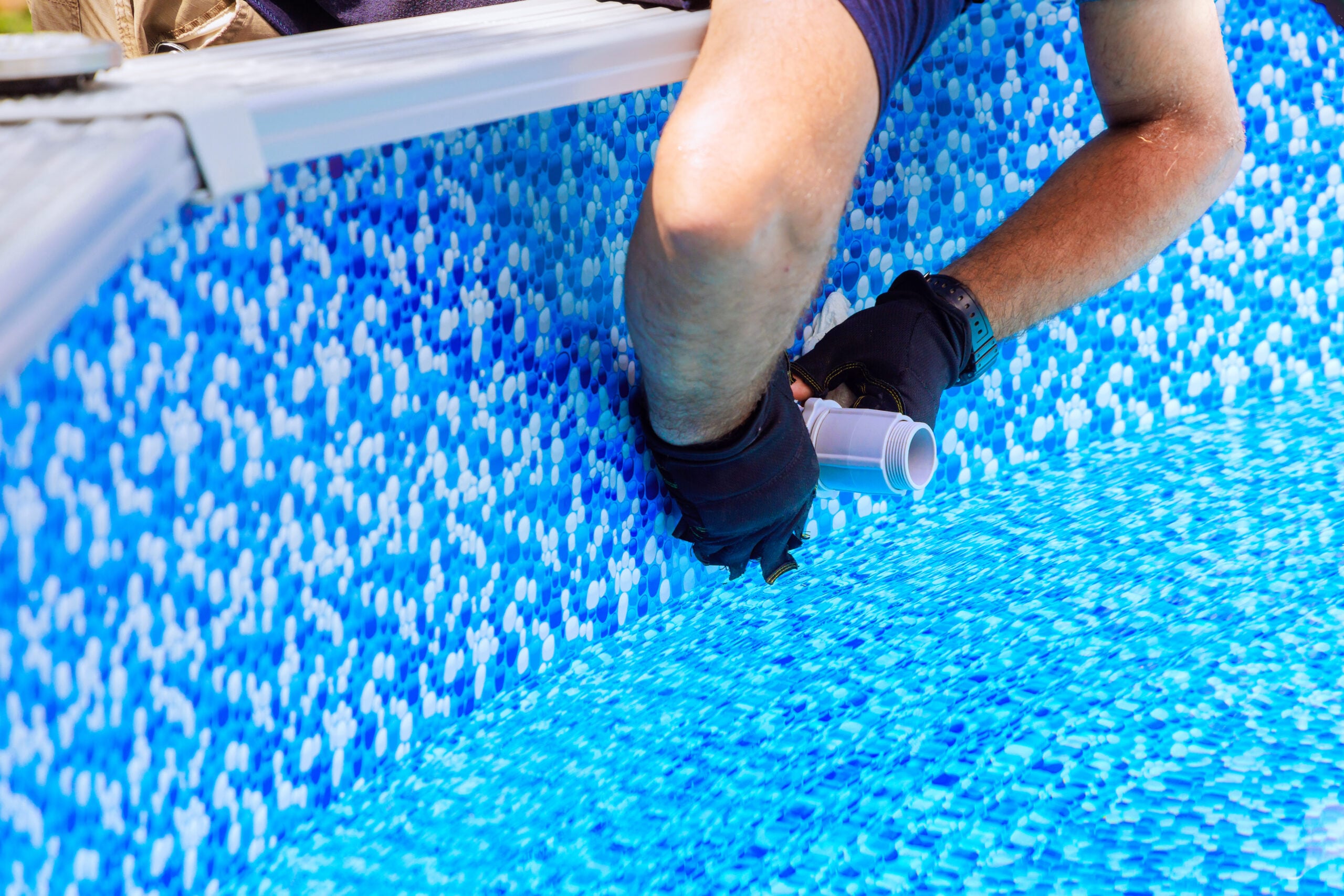
A clean pool filter is the backbone of clear, healthy water. Without regular maintenance, even the best filtration system will struggle to do its job — leaving you with murky water, equipment strain, and potential health hazards. Whether you’re running a cartridge, sand, or diatomaceous earth (DE) filter, knowing how to clean it properly makes all the difference.
Here’s what you need to know for each type.
Cartridge Filters
Cartridge filters are popular for their ease of use and efficiency. They trap debris through a pleated polyester material that needs periodic rinsing and occasional deep cleaning.
How to clean them:
- Turn off the pump and release pressure through the air relief valve.
- Remove the filter cartridge from the housing.
- Use a garden hose to rinse the pleats from top to bottom, working your way around the entire cartridge. Never use a pressure washer — it damages the pleating.
- For a deeper clean, soak the cartridge overnight in a filter cleaning solution or a mixture of dish soap and water, then rinse thoroughly.
- Inspect for cracks or frayed fabric before reinstalling.
How often: Rinse every 2–6 weeks depending on usage. Deep clean at least twice per season.
Sand Filters
Sand filters work by pushing water through a bed of specially graded sand that captures particles as water flows through. Over time, the trapped debris actually improves filtration — but eventually, the sand gets too clogged and needs backwashing.
How to clean them:
- Turn off the pump and set the multiport valve to Backwash.
- Turn the pump back on and run it until the water in the sight glass runs clear — typically around 2–3 minutes.
- Switch the valve to Rinse and run the pump for about 30 seconds to settle the sand bed.
- Return the valve to Filter and resume normal operation.
For a deeper refresh, add a sand filter cleaner to the skimmer and let it circulate before backwashing. This helps break down oils and biofilm that regular backwashing won’t remove.
How often: Backwash when your pressure gauge reads 8–10 PSI above the normal operating level. Sand itself should be replaced every 3–5 years.
DE (Diatomaceous Earth) Filters
DE filters offer the finest filtration of the three types, capable of capturing very small particles. They use a powder made from fossilized algae — diatomaceous earth — coated over internal grids to filter water.
How to clean them:
- Backwash the filter following the same process as a sand filter.
- After backwashing, add fresh DE powder through the skimmer to recoat the grids. Use the amount specified by your filter’s manufacturer.
- For a full cleaning, disassemble the filter and remove the grids. Rinse each grid thoroughly with a hose, inspect for tears, and soak in a filter cleaner solution if needed.
- Reassemble and recharge with fresh DE powder.
Important: DE powder is harmful if inhaled. Always wear a mask when handling it.
How often: Backwash when pressure rises 8–10 PSI above normal. Full teardown and grid cleaning should happen at least once per year.
General Tips for All Filter Types
- Keep an eye on your pressure gauge. A rising PSI is the clearest signal that your filter needs attention.
- Never skip the rinse cycle after backwashing a sand or DE filter — it prevents cloudy water from returning to the pool.
- Replace worn components. Cracked cartridges, torn DE grids, or degraded sand all reduce filtration efficiency significantly.
Staying on top of pool filter maintenance keeps your pool water crystal clear and extends the life of your equipment. A little routine care goes a long way toward avoiding costly repairs down the road.