

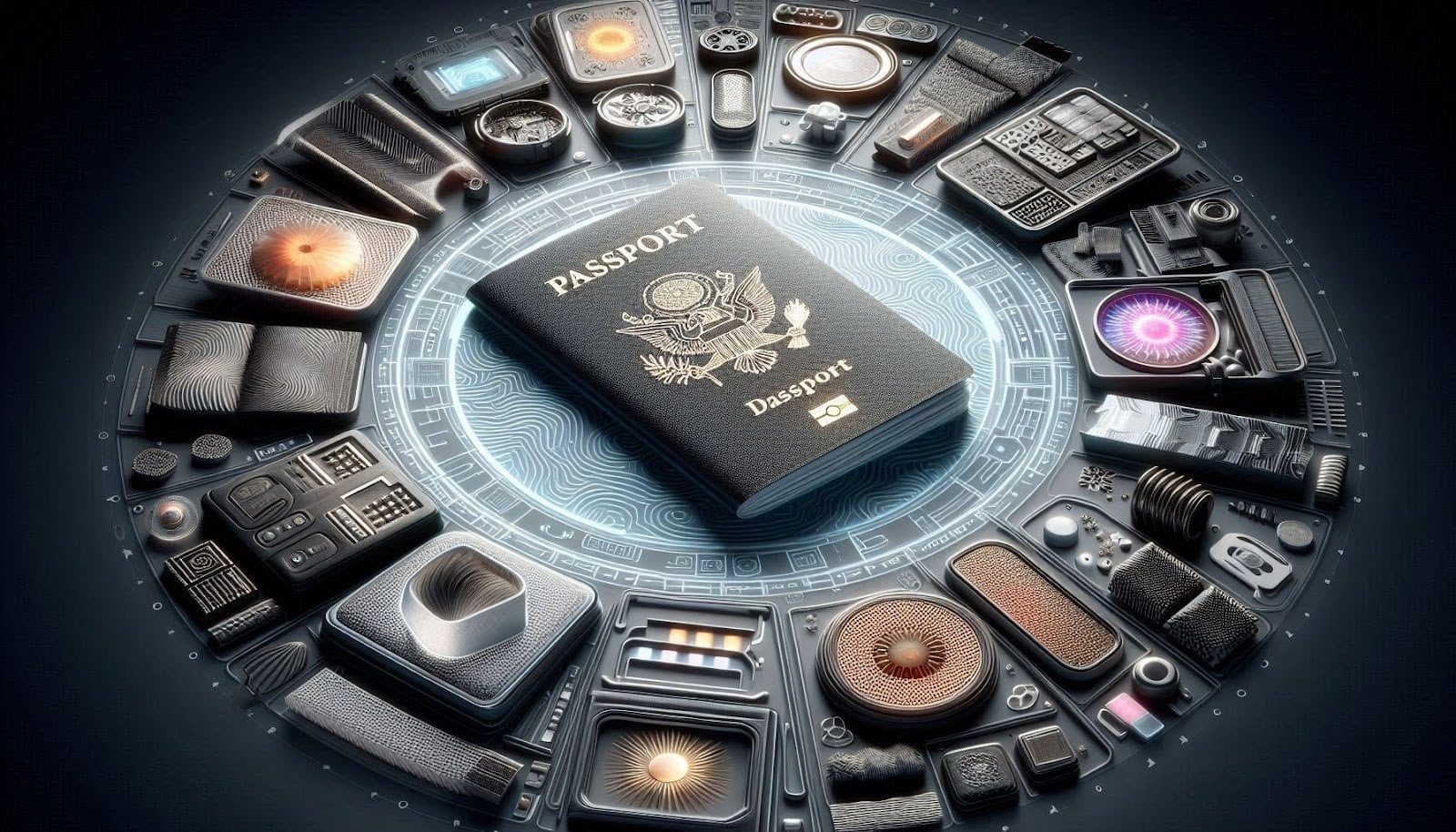
What began as advanced optical technology is now a standard feature in secure travel documents used for identity verification.
WASHINGTON, DC
A modern passport does not defend itself with one security trick. It defends itself in layers, and one of the most visible of those layers is the hologram.
What looks to most travelers like a reflective design detail is, in practice, one of the fastest ways for border officials to test whether a document behaves like a genuine passport or only resembles one at first glance. The U.S. State Department’s overview of the Next Generation Passport makes clear that modern travel documents are built as hardened identity products, with upgraded physical protections such as a polycarbonate data page and laser engraving designed to make tampering and counterfeiting harder.
Holograms matter because they test behavior, not just appearance.
That is what keeps holograms relevant in 2026.
A counterfeit passport can sometimes imitate the broad look of a genuine document in a flat image or quick visual check. What is much harder is reproducing the way an authentic optical feature reacts under movement and light. When an officer tilts a passport, the security element is supposed to shift, reveal depth, change color, or produce another controlled effect. If that response is weak, muddy, static, or simply wrong, suspicion rises quickly.
The point is not that the page looks impressive. The point is that it performs authenticity in real time.
That distinction matters because modern passport fraud is no longer limited to crude fake booklets. A fraudulent document may be used to support financial crime, identity fraud, travel deception or broader schemes built around false records. Governments know this. That is why security features that can be checked quickly and reliably in the hand still matter so much.
Why border officers value holograms so highly.
In a busy airport, seaport, or land crossing, officers do not always begin with a deep forensic review. They begin with speed.
A passport is handled, tilted, scanned, and compared in seconds. Holograms are valuable because they can be tested almost instantly without a specialized setup. A trained examiner does not need a lengthy technical report to know whether a security device looks flat when it should shift or whether a supposedly protected page behaves like an ordinary print.
That makes holographic security one of the most practical frontline defenses in modern document inspection. It creates a fast filter. If the visible security behaves incorrectly, the document can be moved into deeper review before more trust is extended to it.
That first-stage decision matters. In passport inspection, slowing the process down is often the moment a fake start to lose its advantage.
A passport is judged by how it reacts under challenge.
That is the broader principle behind strong passport security. A genuine document is not supposed to remain visually static under every condition. It should behave differently depending on how it is examined.
Tilt it, and the optical feature should respond.
Hold it under changing light, and certain details should become clearer.
Move from casual viewing to closer inspection, and the document should keep answering the same question correctly: Is this genuine?
Counterfeits often fail not because they look obviously fake from across a room, but because they stop behaving correctly once the document is challenged the way real inspectors challenge it. That is where holograms become especially valuable. They force the counterfeit to do more than imitate a still image. They force it to imitate motion, angle, and light response.
That is a much harder problem to solve.
Holograms work because they sit inside a larger security system.
No serious passport program relies on holograms alone. Their strength comes from how they reinforce other layers, including secure paper, hidden inks, precise personalization, machine-readable features, and biometric checks.
In its explanation of the high-tech features that make passports secure, Amicus International Consulting describes modern passport protection as a combination of physical and digital defenses, including machine-readable zones, biometric features, and visible anti-counterfeit devices. That broader view is important because a hologram is strongest when it confirms what the rest of the document is already signaling.
A secure passport should look right, shift right, feel right, and scan right. If one of those things breaks down, confidence in the document starts to weaken. If several break down, the document quickly becomes difficult to defend.
This layered approach is what makes modern travel documents so difficult to fake well. A criminal may reproduce one element fairly convincingly. Reproducing all of them together is another matter entirely.
Visible security matters because it creates a fast first filter.
Holograms are especially useful because they are public-facing. A traveler may not understand machine-readable logic, substrate chemistry, or embedded data structures, but they understand that a passport is supposed to contain dynamic security features.
That visibility helps officials, too. It gives them a quick, low-friction way to separate documents that deserve confidence from documents that deserve suspicion. If the visible security feature behaves incorrectly, the passport can be moved into deeper inspection before more time is spent trusting it.
This does not prove fraud by itself. But it creates an early warning sign, and early warning signs are exactly what frontline inspection depends on.
The power of the hologram is not that it tells the entire story. It is that it tells officers whether the story should continue without interruption.
The data page has made physical counterfeiting harder.
Modern passport design has also made it more difficult for counterfeiters to rely on partial tampering rather than full reproduction.
The modern U.S. passport uses a polycarbonate data page and laser engraving, two features that make the identity page harder to alter without leaving evidence. That matters because fraud is not always about creating an entirely fake booklet from scratch. Sometimes the goal is to manipulate a real one by changing a photograph, a date of birth, or other personal details.
Stronger physical construction reduces that opening and makes the hologram only one part of a broader anti-tamper strategy.
This is important because passport fraud often lives in the gray area between full forgery and subtle manipulation. A document may begin life as genuine, then be altered in ways the fraudster hopes will escape notice. Hardened data pages, layered printing, and optical security make it that much more difficult.
Why holograms are still crucial in a biometric era.
It might seem that once border systems rely more heavily on biometrics, visible optical features would matter less. The opposite is closer to the truth.
Biometric checks increase the importance of early document screening because the passport still has to be trustworthy enough to move into that next phase. A recent Reuters report on expanded facial recognition at U.S. borders highlighted how document checks are increasingly tied to biometric verification intended to reduce visa overstays and detect passport fraud.
That means a counterfeit document now faces more than one gate. It has to survive physical inspection first, then identity verification systems that compare the person to the document.
That does not reduce the value of holograms. It increases it.
Before a chip is read or a face is matched, the booklet still lands in a human hand. If the hologram does not react correctly, if the page construction looks suspect, or if the overall document behaves like a reproduction rather than a secure credential, the traveler may be pushed into deeper scrutiny immediately.
In that sense, hologram security remains a frontline defense because it helps officials decide very quickly whether the document deserves to advance to the next layer of trust.
Counterfeiters increasingly face a performance problem.
This is why modern passport fraud is so difficult to sustain. Criminals are no longer trying only to copy artwork. They are trying to recreate performance.
The passport must look right, shift right, feel right, scan right, and match the person carrying it.
A counterfeit may approximate one of those qualities. It may even manage two. But surviving all of them together is much more difficult, especially when optical security has been built to expose weakness quickly and publicly.
That is the real importance of holograms. They make the passport prove itself under motion and light, where weak reproductions often break down. They convert security from a static image problem into a dynamic inspection problem.
And dynamic inspection is exactly where many fake documents lose ground.
Why hologram security keeps its frontline role.
What began as advanced optical technology has become a routine part of secure travel document design because it solves a basic border problem. Officials need fast ways to test whether a passport is behaving like the real thing.
Holograms do that well.
They force the document to prove itself under movement, under light, and under pressure from a trained eye. They are not the whole passport security system, but they remain one of its most practical first answers.
In 2026, that is exactly why passport hologram security has become a frontline defense against counterfeiting. It does not work because it is flashy. It works because it forces a forged document to do something it usually cannot do for very long, keep proving it is real.