

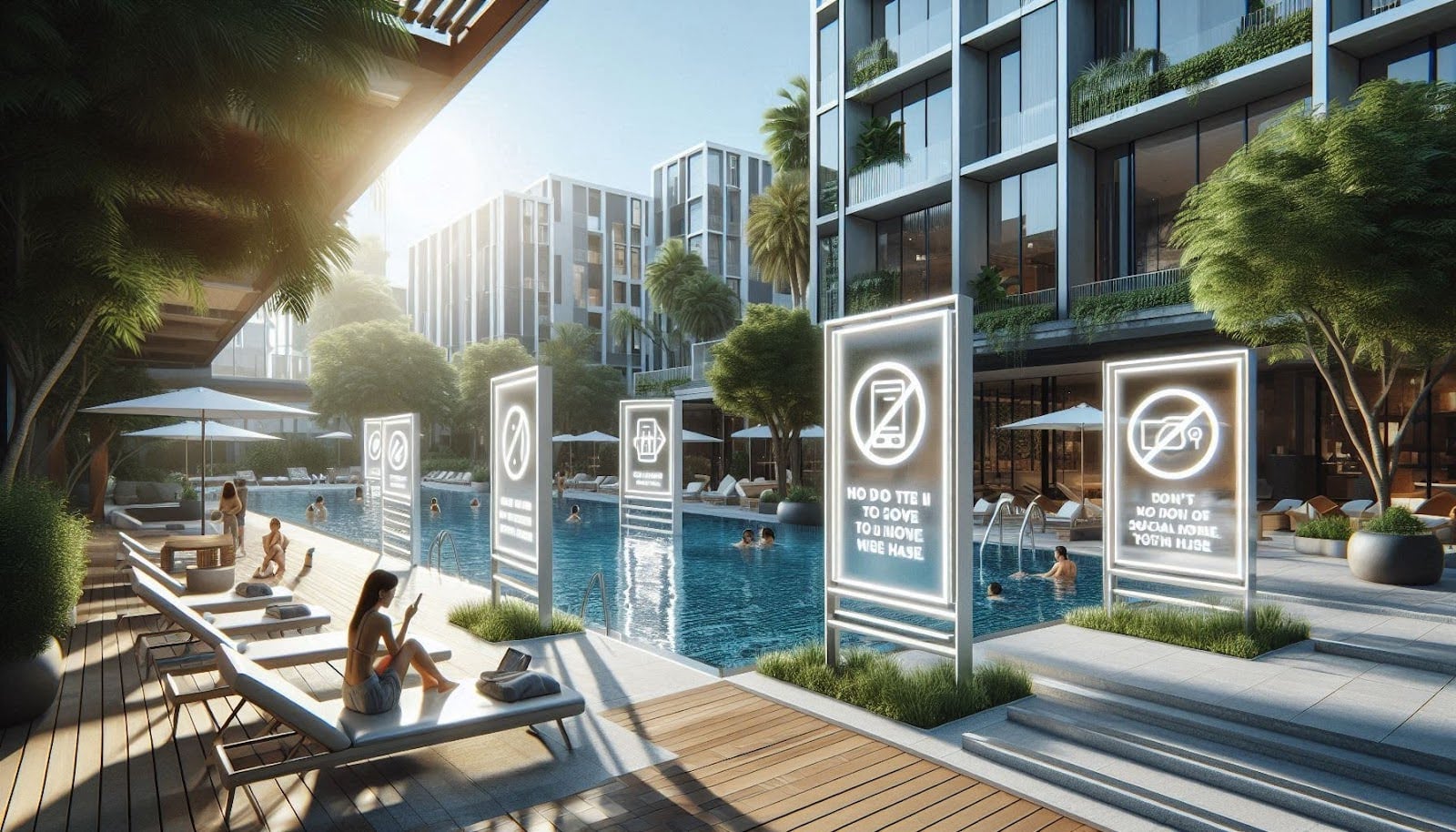
Retreats built around quiet, darkness, stargazing, and sensory reset are attracting travelers burned out by constant stimulation.
WASHINGTON, DC.
Luxury travel used to be easy to identify. It was louder than ordinary travel, more visible, more photographed, more expensive-looking. The premium trip came with the larger suite, the more famous address, the private driver, the hard-to-get reservation, the glossy proof that someone had escaped in style. In 2026, a different version of luxury is moving into view. It is quieter, dimmer, slower, and in some cases almost deliberately uneventful. More travelers are paying for silence, darkness, fewer notifications, fewer decisions, lower sensory load, and a setting that asks them to stop performing wellness and actually feel better.
Silent travel, once a niche concept associated mainly with spiritual retreats and strict meditation programs, is broadening into something much bigger. It now includes dark-sky lodges, quiet hotels, no-phone spa environments, sleep-centered getaways, minimalist nature retreats, low-light evening programming, sound-conscious properties, and itineraries designed less around stimulation than around decompression. The point is not to cram more into the holiday. The point is to remove what has become too much.
That shift makes sense because daily life has become oppressively full. The typical traveler is not just tired in the old way. They are neurologically crowded. Work messages spill into evenings. Social feeds keep moving. Group chats never seem to sleep. Audio is constant, whether it comes from podcasts, traffic, office calls, airport announcements, open-plan restaurants, or the ambient pressure to stay reachable.
Even leisure has become strangely busy. A trip can involve so much comparison, booking friction, restaurant hunting, and content production that it reproduces the same overstimulated mindset people were supposedly trying to escape. Silent travel responds to that reality with a simple promise. Nothing extra. Less noise. Less demand. Less brightness. Less performance. More room to think, breathe, sleep, and notice what happens when the nervous system is not being tugged in five directions at once. For a growing slice of the market, that is now more appealing than another high-energy itinerary with beautiful photos and no actual rest.
The category is broader than the label first suggests. Silent travel does not necessarily mean strict silence in the monastic sense, though for some travelers that remains part of the appeal. More often, it means environments where quiet is built into the design logic rather than left to chance. That might be a retreat that asks guests to lock away their phones for certain hours. It might be a property that treats darkness as a feature rather than a problem, dimming artificial light at night and organizing stargazing rather than nightclub programming.
It might mean architecture that softens sound, meals that unfold without loud music, rooms designed for deeper sleep, or itineraries built around forest walking, thermal bathing, reading, reflection, and sky watching rather than a conveyor belt of activities. The luxury is not that nothing happens. It is that not everything happens at once. That difference is proving powerful because it addresses a problem many travelers can name immediately, even if they would never describe it in clinical language. They are overstimulated. They want places that feel as though the volume has finally been turned down.
That is why darkness and night sky programming are becoming central to the conversation. The modern city has almost eliminated darkness as an experience. People live under artificial light, sleep near glowing devices, and move through nights that are rarely truly dark. In response, a retreat built around night skies can feel almost shockingly restorative. The appeal is not only scenic. It is sensory. The National Park Service’s night skies guidance makes clear that Americans are actively seeking star-filled skies as light pollution spreads and natural darkness becomes rarer.
That public interest helps explain why stargazing has moved from a secondary amenity to a selling point in its own right. Under a dark sky, travelers are doing something more than looking up. They are exiting an overstimulated visual environment and entering one that feels slower, older, quieter, and less demanding. The body registers that change quickly. So does the mind. A night without harsh light, traffic noise, and constant digital checking can feel more luxurious than a room upgrade because it restores a sensory condition that many travelers barely experience anymore in ordinary life.
This is also where silent travel starts to overlap with the broader privacy mood now shaping parts of the travel industry. A lower stimulation trip is often a lower exposure trip too. People who want fewer screens, fewer inputs, and more quiet frequently want less public narration around the journey as well. They are less interested in live posting, real-time geotagging, and turning every beautiful place into instant proof of experience.
That does not mean they reject technology altogether. It means they are becoming more selective about what deserves access to their attention. Analysts at Amicus International Consulting have argued that more travelers are now treating discretion, controlled visibility, and lower digital exposure as part of the overall value of a trip, not merely as a security concern. Silent travel fits naturally inside that mindset. A retreat that reduces noise often also reduces the pressure to broadcast. A dark sky program is hard to enjoy while staring into a bright phone. A sensory reset works better when the outside world is not constantly reaching in. Privacy, quiet, and calm increasingly behave like parts of the same product.
That helps explain why silent travel is now being framed as luxury rather than austerity. For years, quiet holidays risked sounding like a compromise, as though the traveler could not access more exciting things. In 2026, the opposite is happening. Silence reads as curated. Darkness reads as exclusive. A property that protects sleep, limits sensory intrusion, and builds space into the day signals confidence in a market that has long equated more with better. The same thing is happening in wellness more broadly.
Travelers are no longer impressed by every version of optimization. Many are skeptical of retreats that simply pile biohacking language, intense programming, and self-improvement tasks on top of already overloaded lives. A calmer model is gaining ground, one that offers fewer goals and more release. That does not mean guests have lost ambition. It means they are changing what they want a premium experience to do. Instead of energizing them for another sprint, they want it to remove friction, soften stress, and give their attention back to them in a more usable form.
The market logic behind this trend is stronger than it first appears. Wellness spending has already moved from indulgence into priority for many consumers, and that shift is influencing where travel dollars go. Reuters reported late last year that younger consumers were increasingly directing discretionary spending toward wellbeing, including retreats and practices tied to mental and emotional health. That matters because silent travel is not just about selling a nice setting. It is selling a benefit people increasingly see as necessary rather than optional. Burned-out professionals do not necessarily want more entertainment.
Parents juggling work and family do not necessarily want another schedule to manage. People who spend all day in communication do not necessarily want a trip that asks them to stay socially and digitally “on.” A silent retreat, a dark sky stay, or a quiet thermal property offers a more legible promise. You will feel less crowded inside your own head. In a market saturated with offers, that kind of clarity is commercially powerful.
There is also a subtle status change built into all this. The old luxury traveler displayed access. The emerging silent traveler displays control. They are not chasing the loudest room in the loudest destination at the loudest moment of the year. They are choosing environments that protect their bandwidth. That can look like a remote lodge with almost no artificial light. It can look like a property where phones disappear at dinner. It can look like a desert retreat that organizes astronomy walks instead of nightclub packages, or a forest hotel where sound design matters more than soundtrack design. In each case, the traveler is paying to move beyond the default conditions of everyday life. Those conditions are not scarcity and discomfort. They are excess and interruption. In that sense, silent travel is perfectly aligned with the pressures of 2026. The premium is not abundance. It is relief from abundance. The product is not noise with better linens. It is the chance to inhabit a quieter human rhythm for a few days and remember that rest is not merely the absence of work. It is the absence of constant sensory negotiation.
The emotional appeal goes even deeper. Silent travel gives people something that ordinary tourism increasingly struggles to deliver: unclaimed experience. In a noisy trip, every moment risks becoming content, commentary, or logistics. The traveler is managing restaurant choices, checking maps, responding to messages, comparing plans, and thinking ahead. In a quieter setting, attention stops scattering so easily.
A meal can just be a meal. A hot spring can just be a hot spring. A long period of darkness under stars can just be darkness under stars. That sounds simple, but it is exactly what many people feel they have lost. Their lives are so mediated that unprocessed experience itself starts to feel rare. Silent travel restores it. It gives the traveler fewer things to react to and, as a result, more room to actually register what they are feeling. That may be why so many who try these trips come back describing them less in terms of activity and more in terms of sensation. Better sleep. More breathing room. Less mental chatter. A strange but welcome feeling that time slowed down.
None of this means that silence is replacing every other form of luxury travel. Plenty of travelers still want energy, social buzz, nightlife, and movement. But the rise of silent travel signals a real change in the center of gravity. For a meaningful share of the market, the premium experience is no longer defined by how much it delivers. It is defined by how much it removes. Remove the glare. Remove the notifications.
Remove the pressure to respond. Remove the soundtrack. Remove the overplanning. Remove the subtle pressure to turn a holiday into evidence of a good life. What remains can feel startlingly rich. A quiet room. A dark sky. A body that finally unclenches. A morning without alerts. A night that is actually dark. A few hours in which nobody wants anything from you. Those things are not flashy, but in 2026, they are becoming extremely valuable.
That is why silent travel is emerging as a new luxury category rather than a passing niche. It speaks directly to the form burnout now takes. People are not only physically tired. They are overstimulated, overexposed, and mentally interrupted. Retreats built around quiet, darkness, stargazing, and sensory reset are answering that with unusual precision. They are not asking travelers to become different people. They are offering them a place where, for a little while, they do not have to be so constantly activated. In an age that keeps getting brighter, louder, faster, and more documented, that promise feels less like a wellness accessory and more like one of the most rational premium products the travel industry can sell.