
Why official travel documents remain tightly controlled, despite persistent marketing that suggests diplomatic privilege is available for purchase.
WASHINGTON, DC,.
The myth survives because it is so easy to sell.
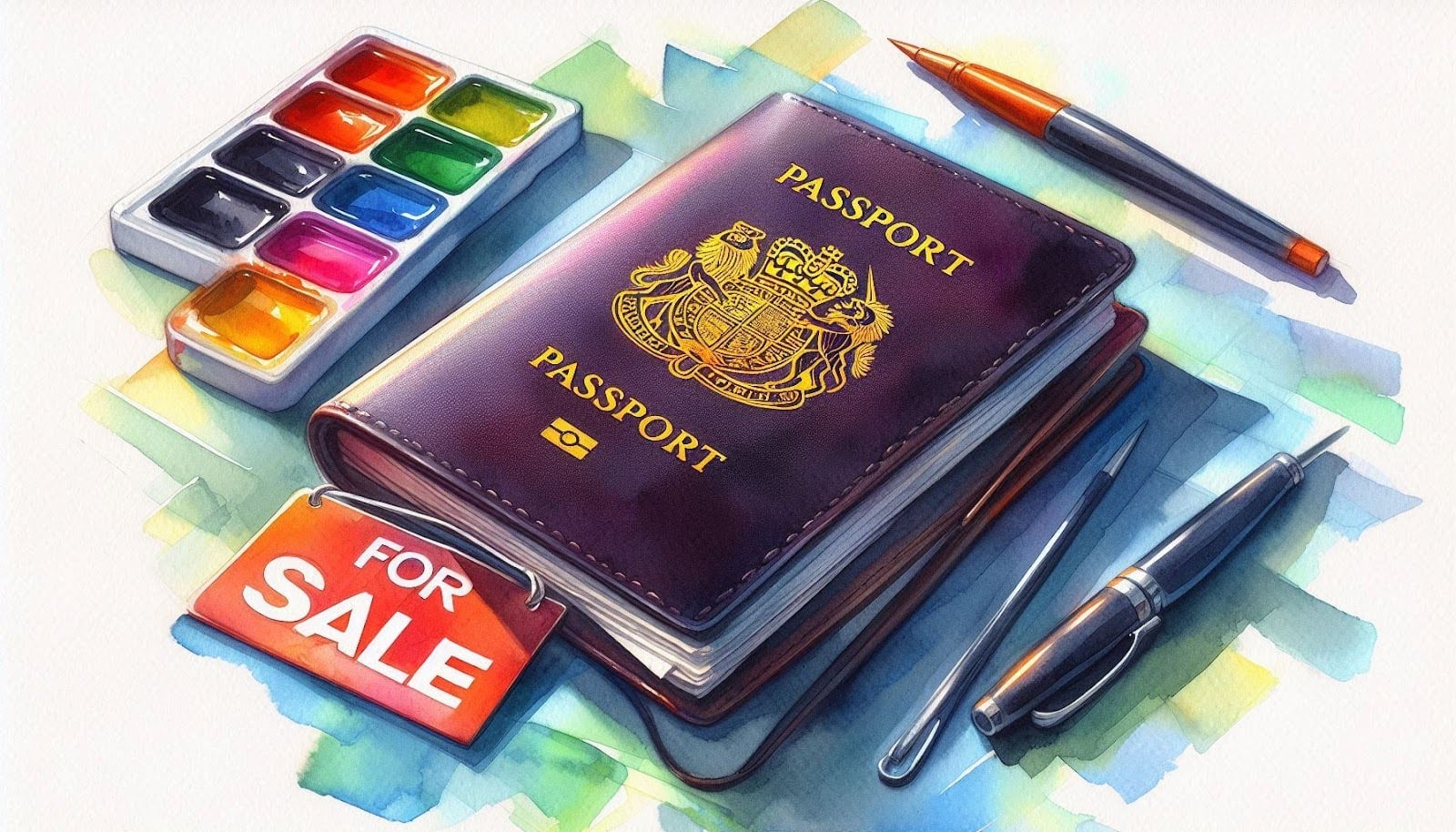
A diplomatic passport looks powerful. It sounds powerful. It carries the kind of symbolic weight that makes people believe it must open doors that ordinary documents cannot. In online ads, private chat groups, encrypted messages, and whispered referrals, that symbolism is turned into a sales pitch. Buyers are told there are quiet channels, special appointments, and government relationships that can place them inside a more protected category of travel.
The reality is much less glamorous.
What money can often buy in this market is not diplomatic privilege, but the appearance of it. What it cannot reliably buy is the legal structure that gives official status real force, state purpose, lawful appointment, recognition by other governments, and the limited but very real framework that makes diplomatic standing mean something beyond the cover of a passport.
That gap between symbol and law is where the myth thrives.
For years, the phrase diplomatic passport has carried a kind of modern folklore. To the wealthy, it may suggest discretion. To the anxious traveler, it may suggest smooth passage. To someone under pressure, it can sound like an insurance policy against ordinary scrutiny. Brokers and intermediaries understand that instinct well. They do not usually market the document as a simple forgery. They market access, influence, and process. The offer is framed as sensitive, insider, and selective, not criminal. The client is told he is not buying a passport, exactly. He is buying a pathway to a title, an appointment, or a relationship that may justify one.
That wording is not accidental. It is the foundation of the myth.
The cleanest way to puncture it is to start with what official authorities actually worry about. As Interpol explains in its guidance on identity and travel document fraud, the danger is not limited to obvious counterfeits. It includes forged documents, fraudulently obtained genuine documents, and genuine documents used in ways that do not match the holder’s lawful status. That is a crucial distinction, because many buyers still think the only real danger is a fake passport produced by amateurs. In practice, some of the most serious legal problems arise when a document looks official, but the story behind it is weak, inflated, or corruptly assembled.
That is why the myth is so persistent. It does not always require a crude lie. Sometimes it only requires a partial truth stretched beyond recognition.
A government really does issue diplomatic passports. A government really can appoint envoys, representatives, and certain types of officials. A title may be real in some narrow domestic or ceremonial sense. But the existence of those facts does not mean a private buyer can purchase the legal effect that online sellers imply. It does not mean another state will recognize the holder as entitled to any special treatment. It does not mean immunity exists. It does not mean a border officer, visa official, or financial compliance team will accept the story simply because the paper looks impressive.
That is where buyers often misunderstand what they are actually shopping for.
They think they are seeking a document. In reality, they are seeking status. More specifically, they are seeking recognized status, the kind that survives scrutiny outside the room where the deal was made. That is much harder to obtain than a booklet, a title or an appointment letter. It depends on state systems, official purpose, and recognition that cannot be privately willed into existence by a fee.
This is the point serious analysts keep returning to. In its discussion of diplomatic passports and immunity, Amicus International Consulting explains that a diplomatic passport does not automatically confer immunity, as immunity depends on recognized status and host-state accreditation. That sounds like a dry technical rule, but it goes directly to the heart of the myth. A buyer may be able to pay for paper. A buyer may even be able to pay for a role that sounds elevated. But the legal privilege many buyers imagine is tied to recognition and function, not simply to possession.
Once that distinction is understood, much of the market starts to look different.
The websites promising “official status solutions” or “government-connected facilitation” are no longer selling an elite travel product. They are selling ambiguity. They are selling the possibility that official language, an impressive title, and a costly process will be enough to get the client treated differently. In some cases, they may be selling nothing at all except hope and a payment trail. In other cases, they may be selling genuine documents acquired through improper channels, which can be even more dangerous because buyers often mistake the authenticity of paper for the legality of the process.
That is one reason prosecutors and anti-corruption investigators pay so much attention to this world. The transaction is rarely just about a passport. It is about the story surrounding it. Who introduced the buyer? What was promised? Which ministry or office was allegedly involved? How did the money move? What was the buyer told the passport would accomplish? Was the role tied to real public service, or was it marketed as a private advantage package for someone seeking prestige, mobility, or insulation from scrutiny?
Those questions matter because they reveal what money can actually buy here. It can buy introductions. It can buy polished presentations. It can buy official-sounding explanations. It can buy consultants, fixers, intermediaries, and private channels that imitate the feel of state process. It can buy secrecy, which is often sold as sophistication. It can buy urgency, which is often sold as exclusivity. And it can buy the confidence of a client who wants the story to be true badly enough to lower his guard.
What it cannot reliably buy is lawful diplomatic standing on demand.
That is why so many of these offers lean so heavily on appointment language. The buyer is told that an honorary role may be possible. Or a special envoy title. Or a trade representation function. The exact label changes, but the logic stays the same. The seller knows a direct promise to “sell a diplomatic passport” sounds too crude. But a promise to help arrange an appointment that may justify one sounds more sophisticated, more plausible, and more defensible if questions arise later. The passport is no longer the product, at least not on paper. It becomes the consequence of a role the client is supposedly being guided toward.
That phrasing is one of the most effective parts of the myth because it borrows credibility from real diplomatic categories.
Yet real diplomatic systems do not operate like premium membership clubs. They are bureaucratic, political, and often narrow in who qualifies. They are not designed to help private clients acquire the outward signs of public authority for personal advantage. That is why the gap between what is marketed and what is lawful tends to widen the closer a buyer gets to the actual details. The seller begins with prestige. The buyer eventually asks about recognition, legal basis, accreditation, and scope. At that point, the answers often become vague, defensive, or unusually secretive.
That is not a sign of exclusivity. It is usually a sign that the product being sold cannot survive too much daylight.
The money trail is another place where the myth falls apart. Real official status is supposed to emerge from public authority and public purpose. In the shadow market, status is often packaged through private invoices, layered payments, and intermediaries whose roles become harder to explain as scrutiny rises. A consultant receives a fee for “facilitation.” An adviser handles “documentation.” A contact inside a ministry is said to require compensation. The buyer is told discretion is essential. By the end, the entire arrangement may look less like a lawful state process and more like a transaction designed to privatize the aura of official power.
This is why so many cases, when exposed, stop looking glamorous almost immediately. One of the clearest reported examples remains the Sierra Leone passport scandal, where Reuters reported that anti-corruption officials said service and diplomatic passports had been sold fraudulently to people seeking immigration advantages. The significance of that case was not only the allegation itself. It was the way it showed what the market often becomes when investigators look closely. Not a refined mobility service. Not a lawful diplomatic channel. A corruption problem built around access, money, and official-looking credentials.
That pattern matters because it answers the title question directly. What can money buy? In this corner of the world, money can buy proximity to the symbols of state power. It can buy the aesthetics of officialdom. It can buy a claim, a promise, a title, an introduction, or even, in some cases, a real document obtained through improper means. But none of those things automatically convert into the legal effect buyers imagine.
That is the part the myth works hardest to obscure.
A diplomatic passport does not erase immigration rules by magic. It does not guarantee easier entry. It does not compel foreign authorities to ignore the surrounding facts. It does not automatically soften banking scrutiny or create a private sphere outside compliance systems. Above all, it does not automatically produce immunity. Immunity, where it exists, is not a lifestyle accessory. It sits inside a formal legal relationship between states and the officials they recognize.
This is why even genuine official documents can become liabilities if used beyond their lawful purpose. A buyer who thinks he has acquired a shield may start acting differently at borders, in visa applications, with banks, or in business negotiations. He may imply protections that do not actually exist. He may rely on a title that sounds stronger than it is. He may assume the mere existence of official paper changes the rules around him. In those moments, the myth becomes not just expensive but dangerous, because the buyer is no longer simply misinformed. He may be stepping into misrepresentation, document misuse, or wider fraud exposure.
The tragedy of this market is that it often attracts people who are especially vulnerable to grand promises. Some are drawn by vanity. Some by convenience. Some by fear. Some are looking for a Plan B in a world that feels unstable and overexposed. The more nervous or pressured the client is, the easier it becomes to sell him the idea that official status can be quietly arranged for cash. The seller does not need to convince him with the law. He only needs to convince him with possibility.
That is why the myth keeps surviving each time it is debunked. It offers exactly what many people want most, a controlled shortcut through systems they do not trust or do not fully understand.
But official travel documents remain tightly controlled for a reason. They are not simply travel perks. They are part of how states identify and protect people acting on official state business. If that category could be bought privately without consequence, the credibility of the entire system would start to collapse. Borders, ministries, and foreign services depend on the basic assumption that official documents and official roles mean what they claim to mean. The tighter those systems become, the more the myth adapts by sounding more polished, more legalistic, and more exclusive.
The core deception, though, does not change.
It says money can buy a status that the law reserves for public function.
In practice, money usually buys something much less stable. An expensive narrative. A risky paper trail. A role with unclear effect. A promise that cannot survive independent verification. Or, in the worst cases, entry into a criminal marketplace that treats official status as something to be copied, rented, or abused.
That is the diplomatic passport myth in its simplest form. It survives because the symbolism is strong, the demand is real, and the online market is skilled at dressing fantasy in official language.
What money can buy is the appearance of access.
What it cannot reliably buy is the legitimacy that makes access real.