

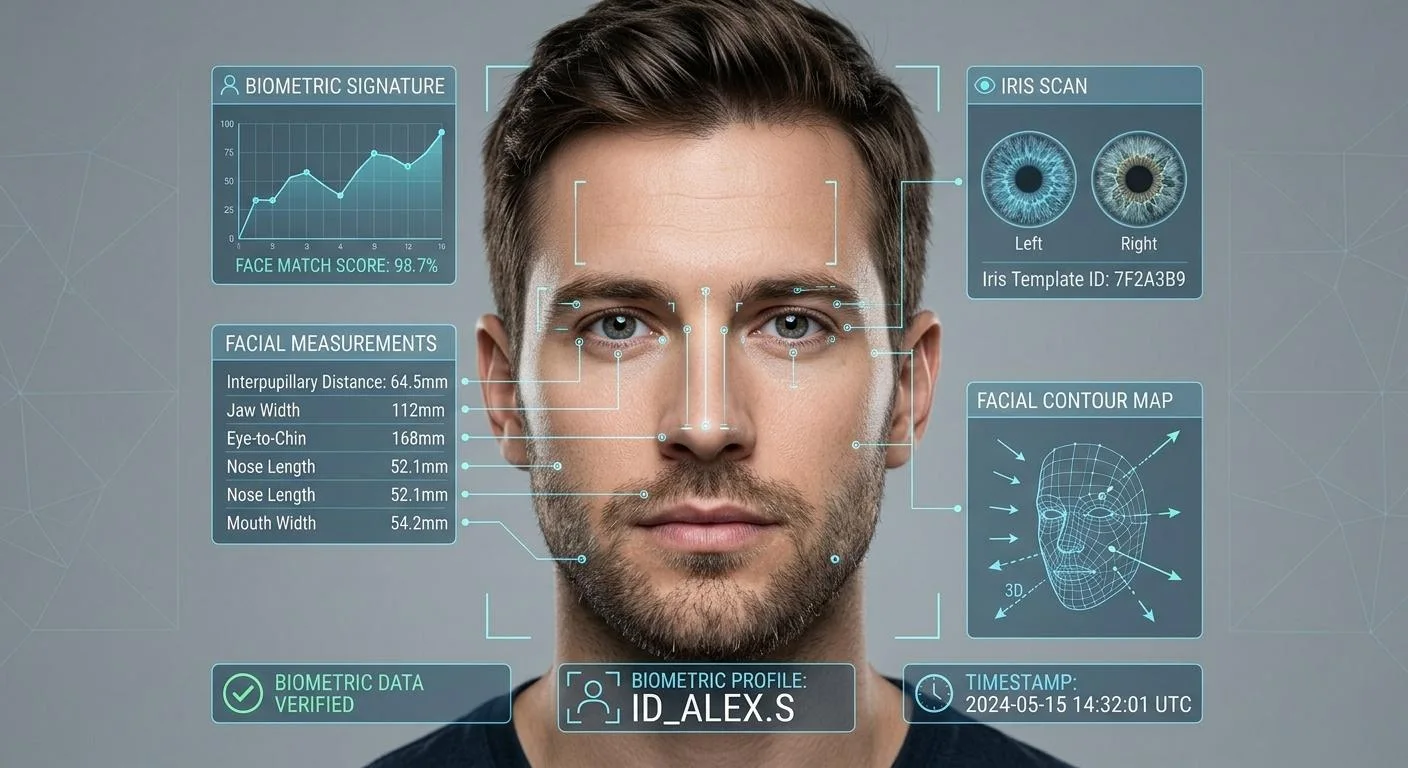
Camera conditions affect the quality of the photograph available for biometric comparison, meaning seemingly ordinary factors such as illumination, head position, facial orientation, motion, and camera distance can affect how confidently automated border systems evaluate a traveler.
WASHINGTON, DC, October 22, 2026, Automated facial recognition has become an increasingly visible component of international air travel, yet the technology operating behind airport eGates and biometric inspection points still depends heavily on something remarkably familiar: obtaining a clear, properly positioned photograph of the traveler standing in front of the camera.
Although modern recognition algorithms can compensate for substantial differences between photographs, including aging, changes in hairstyle, moderate variations in expression, and some differences in illumination, the quality of the live photograph remains important because the system must extract enough reliable facial information to make a meaningful comparison.
Research published by the National Institute of Standards and Technology has shown that lighting conditions can materially affect recognition performance, particularly when facial images have uneven illumination, deep shadows, or other photographic characteristics that make it harder for software to analyze key facial regions consistently.
For travelers, this means an unsuccessful automated comparison does not necessarily indicate that the passport, identity or traveler has triggered a security concern, because the initial problem may simply involve the quality of the photograph captured when the person approached the inspection camera.
Airport Face Recognition Begins With Image Capture
When a traveler approaches an automated border gate, biometric departure terminal or identity-verification checkpoint, the facial recognition process usually begins when a camera captures one or more photographs while the traveler stands within a designated area and looks toward the imaging system.
Software then analyzes the captured image and identifies facial regions that can be converted into a mathematical representation, allowing the system to compare characteristics extracted from the live photograph with characteristics extracted from an authoritative reference image associated with the traveler.
Depending on the airport and border-control architecture, that reference photograph may originate from the passport’s electronic chip, an immigration record, a previously captured government photograph, or another authorized identity source used by the agency operating the particular inspection system.
The comparison therefore depends on two photographic inputs rather than one, because even an extremely clear passport portrait can become difficult to compare when the live camera photograph contains significant shadows, motion blur, an unusual viewing angle, or insufficient visible facial detail.
Modern systems frequently capture several photographs rather than relying entirely on a single frame, allowing software to evaluate available images and select a stronger candidate when the traveler’s movement, blinking, posture or position temporarily reduces the usefulness of one particular photograph.
That process helps explain why some airport cameras photograph travelers almost immediately while others require several seconds of positioning, because the equipment may try to acquire an image that meets predefined quality requirements before starting or finishing the comparison.
Lighting Changes What the Camera Can See
Human observers can often recognize a familiar face despite poor lighting because the brain combines visual information with memory, context and expectations, yet automated recognition systems primarily depend on the image information available within the photographs being compared at that particular moment.
Strong overhead lighting can create shadows beneath the eyebrows, nose or chin, while illumination arriving primarily from one side can make one half of a face substantially brighter than the other, creating differences that facial recognition software must account for during analysis.
Likewise, excessively bright illumination can wash out facial texture or reduce contrast, while insufficient lighting can introduce image noise, blur and lost detail that makes the boundaries around facial features less clearly represented within the photograph captured by the inspection camera.
NIST research on recognition under varying conditions found that illumination can remain a meaningful factor even when advanced algorithms compensate for lighting differences, reinforcing why controlled acquisition environments still matter when biometric systems must process large numbers of travelers quickly.
Airport installations therefore frequently use carefully positioned lighting, camera exposure controls and defined standing areas intended to create more predictable image conditions, reducing the amount of variation the recognition software must address before evaluating whether two facial representations are sufficiently similar.
Posture Can Change the Apparent Geometry of a Face
The position of a traveler’s head also influences biometric image quality because rotating, tilting or significantly raising or lowering the head changes the way facial landmarks appear relative to the camera and can partially conceal important regions used during automated analysis.
A person who turns slightly toward a companion, looks toward an airline employee or glances downward while presenting travel documents may unintentionally create a photograph in which one side of the face appears compressed while the opposite side becomes comparatively more visible.
Similarly, raising the chin substantially can change the apparent position of the eyes, nose, mouth and jaw within the image, while lowering the head may cause the eyebrow or forehead region to interfere visually with the eyes from the camera’s perspective.
NIST research on border-entry photography previously identified substantial image-quality problems when travelers did not face the camera directly, leading researchers to examine how camera design and visual cues could encourage people to orient themselves naturally toward the imaging equipment.
Those findings highlight an important distinction between facial recognition performance and identity itself: a poor camera angle does not change who the traveler is, but it can change the quality of the biometric evidence available to the automated system.
Why Looking Toward the Camera Matters
Airport instructions asking travelers to look directly toward a camera are therefore not merely intended to produce a conventional photograph, because a frontal image generally gives recognition software a more symmetrical and complete representation of the facial characteristics needed for comparison.
When both eyes, the nose, mouth, cheeks, and overall facial outline remain visible in approximately frontal orientation, the system has more consistent information from which it can locate landmarks, normalize the photograph and generate the mathematical representation used for matching.
NIST’s earlier border-camera research found that helping travelers understand where to look could improve frontal positioning, showing that something as simple as recognizable camera design or an obvious visual target can influence biometric image quality at inspection points.
This principle remains relevant even as algorithms improve because sophisticated software can compensate for moderate photographic differences, yet a strong initial image reduces unnecessary complexity and generally gives the system better information for comparison.
Camera Distance and Facial Size Also Matter
Travelers may notice airport terminals instructing them to move forward, step backward or position themselves within markings on the floor, because the apparent size of the face within the camera image can influence how much usable biometric detail the system captures.
Standing too far away may produce a facial image that occupies relatively few pixels, limiting the detail available around the eyes, nose, and mouth, while standing unusually close can cause framing problems or perspective distortion, depending on the camera’s optical characteristics.
Many automated systems address these challenges by using cameras capable of adjusting their viewing angle, zoom or focus, while other installations use multiple imaging devices positioned at different heights to accommodate travelers without requiring substantial manual adjustment.
The objective is not to reproduce passport-studio photography perfectly, but to capture a sufficiently detailed, appropriately scaled facial image that software can align with the reference photograph and reliably assess similarity within the operating limits established by the border authority.
Movement Can Reduce Image Quality
A traveler walking continuously toward an eGate, turning unexpectedly, or speaking while the image is captured can introduce motion or expression changes, especially when the camera must capture images within fractions of a second to process passengers efficiently.
Motion blur can soften the edges around facial features, while rapid head movement can cause individual video frames to contain different viewing angles, requiring the acquisition software to determine which frame offers the strongest combination of frontal orientation, sharpness and visible detail.
Airport systems can reduce this problem by capturing multiple frames, providing visual prompts, or briefly instructing travelers to stop and face the camera, creating a short period when the imaging environment is more controlled than the surrounding terminal.
The Transportation Security Administration’s facial comparison technology similarly shows how identity-verification systems rely on capturing a live photograph and comparing it against an approved identity reference, rather than simply recognizing a traveler by appearance alone.
Glasses, Hats and Other Obstructions
Objects covering parts of the face can also affect image acquisition, although modern recognition technology has become increasingly capable of handling ordinary variations such as prescription eyewear, hairstyles, facial hair and modest changes in everyday appearance.
Problems become more significant when reflective lenses obscure the eyes, heavily tinted glasses conceal important facial information, hats create pronounced shadows or scarves and other coverings prevent the camera from clearly observing regions required for the comparison.
Some systems may instruct travelers to temporarily remove certain items, while others can obtain adequate biometric information without requiring changes because the image remains sufficiently clear for the software’s quality and matching requirements.
The specific procedure varies by jurisdiction and airport, so travelers should follow the instructions displayed on the inspection equipment or provided by border personnel rather than assuming requirements at one airport apply everywhere else.
Facial Expression Can Alter the Capture
Facial expression represents another variable because smiling broadly, speaking, squinting or making other pronounced movements can temporarily alter the geometry surrounding the mouth, cheeks and eyes compared with the relatively neutral expression commonly used in passport photographs.
Recognition algorithms generally tolerate reasonable expression changes, but neutral or relaxed positioning can still produce a more standardized image and reduce unnecessary differences between the live photograph and the reference portrait stored in the identity system.
This is why biometric capture stations often display straightforward instructions rather than asking travelers to smile for the camera: the goal is accurate automated comparison, not an aesthetically pleasing portrait like ordinary personal photography.
Image Quality Is Only One Part of the Decision
A successful facial comparison should not be confused with a complete border-security decision, because biometric matching generally operates alongside passport authentication, immigration checks, watchlist screening, travel-record analysis and other procedures determined by the responsible border authority.
Likewise, an unsuccessful facial comparison does not automatically establish identity fraud, document manipulation, or criminal activity, because the result may reflect image quality, substantial appearance changes, technical limitations, system thresholds, or other conditions that require additional inspection.
Automated systems often refer unresolved cases for another photograph or manual review, allowing an officer to examine the traveler and travel document rather than treating every failed automated comparison as proof of wrongdoing.
This distinction matters when discussing facial-recognition similarity scores because the score reflects the statistical similarity a particular algorithm detects under specific operating conditions, not a universal percentage indicating whether a person’s identity is genuine.
Passport Photographs Provide a Controlled Reference
Passport photographs generally follow standardized requirements intended to create predictable facial images, including frontal positioning, adequate illumination, appropriate image size and limited obstruction, giving biometric systems a relatively controlled reference against which other photographs can be evaluated.
Electronic passports can additionally store a digital facial image within the contactless chip, allowing compatible border systems to retrieve a government-issued portrait directly from the document after completing the necessary access and authenticity procedures supported by the inspection infrastructure.
The broader relationship between the physical document, electronic chip and biometric comparison is explained in Amicus International Consulting’s guide to modern passport security and identity protection, which examines how multiple security layers work together rather than relying on a single authentication mechanism.
A clear chip photograph still cannot guarantee a perfect live comparison because the traveler may have aged substantially since issuance, changed appearance or encountered poor camera conditions, yet stronger reference images generally provide the recognition system with better material for analysis.
Modern Algorithms Can Normalize Many Differences
Contemporary facial-recognition systems often preprocess images before calculating similarity, including locating the face, identifying landmarks, adjusting orientation, normalizing scale, and preparing the image so important regions can be compared more consistently despite ordinary photographic variation.
These steps can reduce the effect of moderate differences in head position, camera distance or lighting, although normalization cannot recreate facial information that was never captured because of extreme blur, obstruction, poor exposure or severe viewing angles.
This distinction matters because advertisements and popular descriptions sometimes suggest facial recognition operates almost independently of photographic quality, whereas technical evaluations consistently show that recognition performance reflects both algorithm capability and input image characteristics.
NIST evaluations have repeatedly treated image quality and capture conditions as important components of facial-recognition performance, including controlled research examining how characteristics such as illumination, face size, pose and environmental conditions interact with different recognition algorithms.
Better Capture Conditions Reduce Unnecessary Referrals
For airport operators, improving camera positioning and lighting can produce operational benefits beyond recognition accuracy because stronger initial photographs can reduce the number of travelers who require repeated captures, manual intervention or referral from an automated gate.
Even a small improvement in successful automated processing can become significant at major international airports that handle thousands of passengers during peak periods, where delays of several seconds per traveler can eventually affect queues, staffing requirements, and terminal congestion.
This creates a practical incentive for airports and border agencies to treat biometric camera installation as an engineered environment involving lighting, traveler movement, signage, camera height and user interaction rather than simply attaching recognition software to an ordinary surveillance camera.
A Failed Automated Match Is Not a Verdict
Travelers encountering a closed eGate or instruction to see an officer should therefore avoid interpreting the event as evidence that the system has necessarily discovered a passport problem, because automated processing can fail for numerous technical or operational reasons unrelated to wrongdoing.
The next step may involve nothing more than capturing another image under better conditions, repositioning the traveler, examining the passport manually or allowing an officer to compare the person directly with the identity information contained in the travel document.
Automated border technology works best when it rapidly processes routine cases while routing uncertain results for additional review, allowing human officers and other verification systems to address cases where the available biometric evidence does not meet the configured threshold.
Image Quality Remains Fundamental Despite Better Technology
Facial recognition has advanced dramatically from earlier generations of biometric software, yet the underlying principle remains straightforward: recognition algorithms still need sufficiently informative photographs before sophisticated mathematical models can produce useful comparisons between a traveler and a trusted reference image.
Better algorithms can tolerate more variation than older systems, but improving lighting, positioning, camera distance, and traveler orientation remains valuable because those factors determine how much reliable facial information enters the recognition process before any artificial intelligence or statistical comparison begins.
For travelers, the practical lesson is straightforward: standing where instructed, looking toward the indicated camera, and staying still for several seconds can help the system capture the standardized image it needs without changing anything about the traveler’s underlying identity.
Airport facial recognition therefore represents a combination of advanced biometric mathematics and carefully controlled photography, demonstrating that even highly sophisticated border technology can depend on ordinary physical conditions surrounding a person, a camera and the brief moment when an identity photograph is captured.