

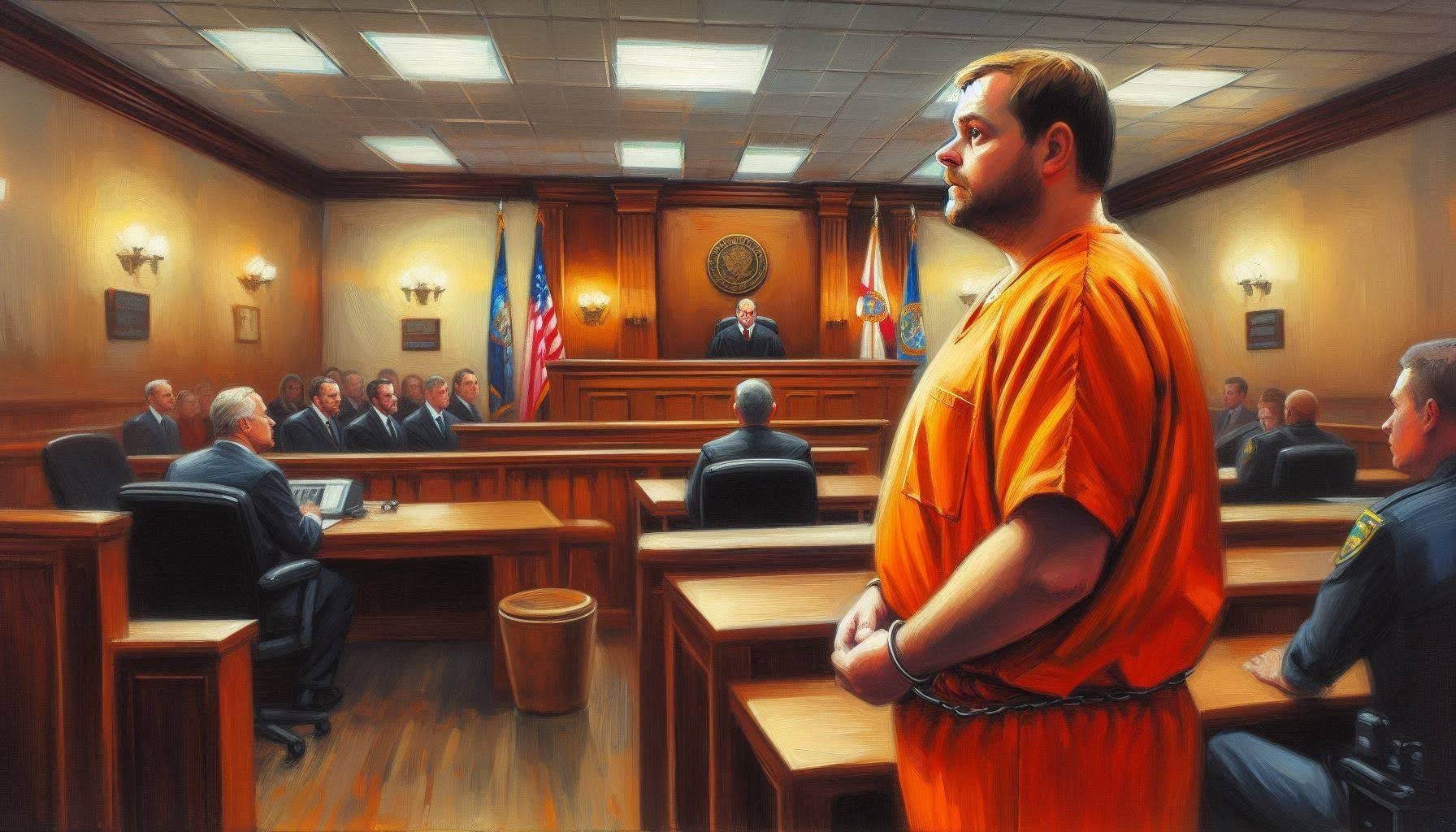
The milestones, from 1998 through 2026, trace how the timeline finally closed.
WASHINGTON, D.C.— The criminal case against Patrick Lutts Jr. began with a fatal collision on Christmas morning in 1998 and ended with guilty pleas nearly 28 years later.
Between those events came criminal charges, an arrest in another state, a missed Florida court hearing, an attempted Canadian border crossing, and more than two decades during which Lutts lived in Toronto.
An anonymous tip in November 2023 finally gave investigators the information required to reconnect the defendant with the outstanding Orange County warrant. Toronto police confirmed his identity through surveillance and arrested him in February 2025.
Canadian extradition proceedings occupied most of the following year. U.S. Marshals returned Lutts to Orlando on February 5, 2026, and he pleaded guilty to two counts of DUI manslaughter on March 27.
The court sentenced him to 13 years in prison, followed by two years of probation, permanently revoked his driving privileges, and credited his Canadian detention.
The timeline shows how a case can remain legally open while producing little visible movement. It also shows how quickly a dormant prosecution can accelerate once authorities obtain a confirmed location.
Every milestone changed the central question.
The crash asked what had happened. The investigation asked who was responsible. The disappearance asked where the defendant had gone. The tip asked whether police had found the correct person. Extradition asked when he could be returned.
The guilty pleas finally answered whether the case would reach judgment.
December 25, 1998: The Crash
During the early morning hours of Christmas Day, Lutts’s pickup truck struck a vehicle carrying 19-year-old Nancy Lopez Leon and her 18-year-old boyfriend, Darvin Javier DeJesus-Taboada.
The collision occurred near State Road 528 in Orlando. Nancy and Darvin were ejected from their car and killed.
Florida Highway Patrol investigators said Lutts smelled strongly of alcohol after the crash. His blood alcohol concentration was measured at 0.272, more than three times Florida’s legal limit of 0.08.
The physical event lasted moments. Its legal consequences would extend through several generations of investigators, prosecutors and family members.
Nancy and Darvin had reportedly imagined marriage, a home and children. Their families instead entered a criminal justice process that would remain incomplete for most of the next three decades.
Christmas became the annual anniversary of both the deaths and the unresolved case.
March 1999: Prosecutors File Charges
Orange County prosecutors filed two counts of DUI manslaughter against Lutts.
The separate counts reflected the two lives lost in the collision.
Charging documents established the allegations and preserved the state’s authority to prosecute. They did not determine guilt. Lutts still had the right to answer the charges through the court process.
The records collected after the crash, including the blood alcohol result and investigative observations, became the evidentiary foundation of the case.
Their preservation would prove essential because the prosecution would not reach judgment until 2026.
At this stage, the case remained a Florida criminal matter. It had not yet become an interstate search or international extradition proceeding.
1999 to 2002: The First Gap
For several years after the charges were filed, Lutts was not before the Orange County court.
The public record contains less detail about this initial period than about his later disappearance. The prosecution existed, but the state lacked the sustained custody necessary to move toward trial or plea.
This early gap foreshadowed the central problem that would define the case.
Criminal charges can survive without the defendant’s presence. Courtroom proceedings generally cannot.
The state needed to locate Lutts and bring him within the court’s control.
That opportunity arrived in Connecticut.
June 2002: Arrested After Another Collision
Lutts was arrested in Connecticut following another impaired-driving collision.
The encounter allowed authorities to reconnect him to the pending Florida case. He was returned to the legal process and eventually released on a $5,000 bond.
Bond gave Lutts conditional liberty while requiring him to attend scheduled proceedings.
The court now had an addressable defendant, and prosecutors could prepare to resolve the manslaughter charges.
The case appeared to have regained momentum after years of uncertainty.
That control proved temporary.
September 29, 2003: Attempted Entry into Canada
Canadian court records later showed that Lutts attempted to cross into Canada at a Niagara Falls port of entry.
The date was significant. His Orange County plea hearing was scheduled two days later.
Canadian border officials reportedly refused him admission after discovering the pending Florida charges.
The encounter created an official record showing that Lutts was trying to enter Canada immediately before the hearing.
Canada Border Services Agency later had no record explaining how he ultimately entered the country.
The failed crossing did not prevent his disappearance. It became an important piece of the chronology reconstructed after his arrest.
October 1, 2003: The Missed Plea Hearing
Lutts failed to appear in Orange County.
The absence stopped the prosecution at the moment it appeared ready to move toward a plea. The court could not accept an admission, determine guilt or impose a sentence without the defendant.
An arrest warrant preserved the case and authorized Lutts’s detention if authorities found him.
The missed hearing became the dividing line between two phases.
Before October 2003, Lutts was a defendant participating, however intermittently, in a Florida criminal case. After the hearing, he was a fugitive whose location had to be established before the court could act.
The warrant remained active for more than 20 years.
2003 to 2004: Arrival in Toronto
Lutts later acknowledged leaving for Canada instead of facing the Florida charge.
He said he settled in Toronto and met his longtime partner in 2004. Within months, he moved into an apartment on Isabella Street in the Church and Wellesley neighborhood.
Canadian records described Lutts as living in the country without lawful immigration status.
He reportedly remained at the same apartment for more than two decades.
The stability of the residence became one of the case’s most surprising features. Lutts did not continuously move among secret locations.
He stayed in one of Canada’s largest cities while the Florida warrant remained unresolved.
The Toronto Years: Pat Lighthelp
Lutts used the name Pat Lighthelp publicly.
Under that name, he reportedly worked as an online psychic, offered relationship advice, described himself as a life coach, and hosted monthly horror-themed trivia events at a local bar.
He participated in community and entertainment activities, creating an online presence containing photographs and information about his interests.
People saw him regularly without apparently knowing about the Florida charges.
The separation depended on a missing administrative connection. The Orange County warrant contained the name Patrick Lutts Jr. The Toronto public record centered on Pat Lighthelp.
The same person occupied both identities, but no confirmed lead directed investigators to compare them.
The case illustrated how international fugitives can remain publicly visible while official records stay disconnected.
2014: The Family Still Waits
Nancy’s mother spoke publicly about the continuing pain of losing her daughter and the absence of any direct acknowledgment from Lutts.
By then, the crash was already 16 years old. A child born in 1998 would have been approaching adulthood.
The family continued hoping that Lutts would eventually be located.
Public attention offered one way to preserve awareness, but no report had yet produced the verified address investigators needed.
The case remained legally active and operationally stalled.
The family’s experience showed why the time between court events cannot be treated as empty. Every year without resolution became part of the harm.
November 2023: The Anonymous Tip
A tipster contacted a Florida crime-reporting service and identified Lutts as living in Toronto under the name Pat Lighthelp.
The source was reportedly a United States-based online researcher who used facial-comparison technology, social media photographs and public information to make the connection.
The tip included details about Lutts’s residence and public activities.
This specificity changed the investigation.
Authorities were no longer looking broadly for a defendant believed to be somewhere in Canada. They had a contemporary name, face, neighborhood and apartment building.
The tip did not prove identity. It gave police a claim they could test.
December 2023: Surveillance Begins
Toronto police placed the Isabella Street residence under surveillance.
Investigators observed the person associated with the apartment and tracked his movements on several occasions. They compared the subject with historical photographs and information from the Florida case.
Police also examined whether his activities matched the details supplied by the anonymous source.
This verification protected against mistaken identity. A possible facial match generated through online research could not safely support an international arrest without corroboration.
The stable residence helped officers develop continuity. They could repeatedly observe the same person and confirm that he occupied the reported address.
The investigation had moved from speculation to evidence development.
2024: A Message Reaches Nancy’s Family
Nancy’s relatives said they received a Facebook message from someone claiming to have located Lutts.
The source reportedly explained that authorities had been notified and identified the Toronto bar where Lutts hosted events.
For the family, the message created hope without immediate certainty.
Police still had to verify the information, and Canadian justice officials had to prepare the legal foundation for an arrest and potential extradition.
The tip had reopened the case, but much of the work occurred outside public view.
The family waited again, this time knowing investigators might finally have a specific location.
January 2025: Canada Authorizes Proceedings
A Canadian document indicated that the minister of justice had authorized the attorney general to proceed before the Ontario Superior Court of Justice to seek Lutts’s committal.
The authority to proceed was a major legal milestone.
It showed that the United States had submitted a request capable of entering Canada’s formal extradition system. The authorization did not determine guilt or order immediate surrender.
It allowed a Canadian court to examine whether Lutts should be held for extradition.
The Canadian extradition process requires separate administrative, judicial and ministerial stages. Those safeguards maintain Canadian sovereignty while providing a lawful route for returning people sought by partner countries.
February 26, 2025: Arrest in Toronto
Toronto Police Service Fugitive Squad officers arrested Lutts near Bloor and Jarvis streets.
The location was close to the Church and Wellesley apartment where he reportedly had lived since 2004.
The arrest ended the 21-year fugitive search.
It also demonstrated the importance of identity verification. Canadian officers acted only after the anonymous lead had been corroborated through surveillance and official records.
Lutts was detained under Canada’s Extradition Act and brought before the Ontario Superior Court of Justice.
The investigation had located its subject. The legal system now had to determine the conditions of custody and transfer.
March 25, 2025: Lutts Files a Bail Affidavit
Lutts submitted a sworn affidavit seeking release while extradition remained pending.
He offered to return to his Toronto apartment under house arrest and wear an electronic monitor. He said he had no passport, Canadian bank account or ability to flee.
The affidavit provided Lutts’s own account of the missing years.
He acknowledged leaving for Canada rather than facing the Florida charge and described the decision as a mistake. Lutts said he had stayed in the same apartment for more than 20 years and expected authorities eventually to find him.
He characterized himself as tired of running.
Florida prosecutors opposed release, pointing to his earlier failure to appear.
Spring 2025: Bail Is Denied
A Canadian judge denied Lutts’s request for release.
The ruling kept him in custody while the United States pursued surrender.
The previous bond violation gave the court a documented reason to question whether release conditions would ensure attendance. Lutts had already obtained conditional liberty in Florida and left rather than return.
His detention also ensured that the extradition process would not be interrupted by another disappearance.
The arrest ended the fugitive period, and the bail denial preserved that result.
May 2025: The Arrest Becomes Public
News reports revealed that Lutts had lived openly in Toronto for more than two decades.
His alias, psychic work, trivia events, and long-term residence drew widespread attention. The unusual details risked overshadowing the reason the case existed.
Nancy and Darvin had been killed in the 1998 crash, and their families had waited through every year of Lutts’s absence.
Nancy’s mother expressed gratitude to the anonymous tipster and the American and Canadian officers involved.
Her attorney emphasized that the long delay had created additional pain and called for the charges to be resolved according to law.
Through 2025: Extradition Proceedings Continue
Lutts remained in a Toronto detention center while Canadian proceedings addressed his surrender.
Extradition was not automatic merely because the United States and Canada cooperate closely.
American authorities had to provide supporting documents. Canadian courts had to apply domestic legal standards, and the minister of justice retained responsibility for surrender.
Lutts could contest committal, make submissions and pursue available review.
These protections extended the timeline but ensured that the transfer would occur lawfully.
The case entered the final international stage.
Late 2025: Lutts Stops Fighting Return
Lutts reportedly decided not to continue contesting extradition.
The decision narrowed the path to surrender. Canada no longer needed to resolve every potential challenge before arranging the transfer.
Ending the opposition did not constitute a guilty plea to the Florida charges. It addressed only whether Lutts would continue resisting return.
The criminal case still had to be resolved in Orange County.
The choice changed the calendar. Officials could move from litigation to transfer planning.
The broader legal considerations in extradition often require defendants to balance available challenges against continued detention and the likelihood of eventual surrender.
Lutts ultimately chose to proceed.
February 5, 2026: The Flight to Orlando
U.S. Marshals took custody of Lutts in Canada and escorted him to Orlando.
Orange County authorities arrested him at the airport on the outstanding warrant and booked him into jail.
The flight closed the geographical gap that had controlled the case since 2003.
Lutts was no longer a fugitive, an extradition detainee or a Toronto resident living beyond the Florida court’s reach. He was a defendant in local custody.
The prosecution could now resume without depending on Canadian procedure.
More than 22 years after the missed hearing, the Orange County court had regained physical authority over the case.
March 27, 2026: Guilty Pleas
Lutts changed his plea to guilty on both counts of DUI manslaughter.
The pleas eliminated the need for a trial involving evidence collected nearly 28 years earlier. They allowed the court to enter convictions and proceed directly to sentencing.
Nancy’s mother and other relatives attended.
They described the young couple’s plans and the enduring effect of losing them on Christmas morning. Nancy’s sister thanked law enforcement for maintaining the case across decades and national borders.
Prosecutors noted that Darvin’s next of kin was no longer alive.
The delay had outlasted some of the people who had waited for judgment.
March 27, 2026: Sentencing
The judge sentenced Lutts to 13 years in prison, followed by two years of probation.
His driving privileges were permanently revoked, and he received credit for the time spent in Canadian custody after his arrest.
Lutts apologized to the families and said he had reflected on his life.
The guilty pleas and sentence provided the legal endpoint that had been absent since the 1998 collision.
The formal judgment could not restore Nancy and Darvin or recover the years their relatives spent waiting. It resolved every outstanding procedural question.
The defendant had been found, returned, convicted and sentenced.
Why the Timeline Matters
The case is often summarized as a 21-year fugitive story, but that description captures only one part of its length.
Nearly five years passed between the crash and Lutts’s disappearance. More than a year passed between his Toronto arrest and Florida sentencing.
The complete timeline extended almost 28 years.
Each period was governed by a different obstacle.
The early case required authorities to locate and process Lutts. The fugitive period required a current lead. The surveillance phase required identity confirmation. Extradition required cooperation between two legal systems. The final Florida stage required a plea or trial.
The case advanced only when the obstacle controlling each period was removed.
The Timeline Finally Closes
The Lutts prosecution did not end because time ran out. It ended because the legal system and investigators preserved the possibility of action until information made action possible.
The warrant survived. Evidence remained available. An anonymous tip connected the Toronto resident with the Florida defendant.
Surveillance confirmed identity. Extradition restored jurisdiction. Guilty pleas produced convictions.
The final sentence closed the timeline in procedural terms.
For Nancy and Darvin’s families, the human consequences remain. The judgment did not reverse the crash or return relatives who died during the wait.
It did ensure that flight was not the final entry in the record.
The timeline that began on Christmas morning in 1998 now ends with accountability in an Orange County courtroom in 2026.