

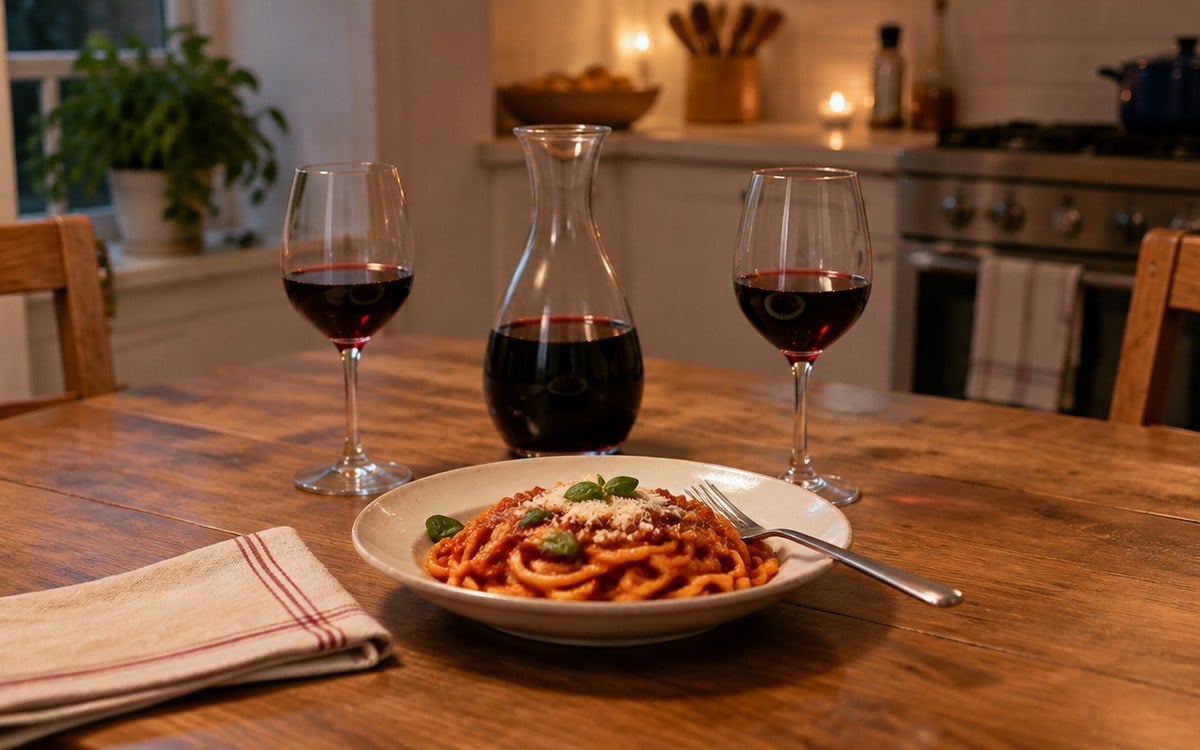
Most of the wine people drink at home is modestly priced. You can make those bottles taste better without spending more. The changes cost little or nothing: temperature, glassware, timing and storage.
Fix the temperature first
Temperature is the biggest free upgrade. Most people serve white wine too cold and red wine too warm. A white straight from a fridge at 37 to 40°F (3 to 4°C) loses its aroma, so take it out 15 to 20 minutes before pouring. A red at warm room temperature tastes boozy and flat, so put it in the fridge for 15 to 20 minutes before dinner.
Rough targets: light whites, rosé and sparkling at 40 to 50°F (4 to 10°C), fuller whites at 50 to 55°F (10 to 13°C), light reds at 55 to 60°F (13 to 16°C) and fuller reds at 60 to 65°F (16 to 18°C). You don’t need a thermometer. Reds should feel cool to the touch, whites cold.
Use a decent glass
A glass with a wide bowl and a rim that narrows lets you swirl and traps aroma. Thick, small tumblers do the opposite. One set of basic all-purpose stemware doesn’t have to be expensive, and it makes a cheap wine taste better.
Give young reds some air
Inexpensive young reds can taste tight or harsh right after opening. Swirling in the glass helps. So does pouring the wine into a jug or carafe 20 to 30 minutes before dinner. You don’t need a crystal decanter. Any clean glass jug works.
A pour-through aerator does the same job at the moment of serving, and it is handy if you drink a glass at a time. Whether you need one depends on what you drink. This guide on wine serving accessories from Unhyd explains what aerators, decanters and dispensers do, and it says plainly that an ordinary weeknight bottle often needs nothing more than a corkscrew and the right glass. Keep that in mind before you spend money on gear.
Pair it with food
Budget wine shows best with food. Crisp whites and light reds go with a wide range of everyday dishes: pasta with tomato sauce, roast chicken, fish and chips, curries with moderate heat. A tannic red needs fat and protein, such as a burger, sausages or cheese, to soften it.
Store the leftovers
Push the cork or screwcap back in, or use a cheap stopper, and keep the bottle in the fridge. Reds and whites both last three to five days that way. Take reds out 30 minutes before drinking so they warm up. Leftovers that start to taste flat still make good cooking wine for sauces, risotto and stews.
Buy smarter
Look at regions known for value. Portuguese reds and whites, Spanish Garnacha and Monastrell, southern French blends, Chilean Carménère and South African Chenin Blanc often deliver more flavour for the money than famous names. Ask the shop staff what they drink at home. They know the best-value bottles on their own shelves.
Try a mixed half case of bottles you have never tasted. Many shops discount six or more. Take notes and buy more of the ones you like.
Skip the gimmicks
You don’t need novelty openers or “wine enhancers.” The basics do the work: cold enough, warm enough, a decent glass, some air when needed, and food on the table.
An everyday bottle can taste like a special one when you treat it with care. Get the temperature right, use a good glass and let it breathe.